2024 Science and Engineering Day at Georgia Tech | Atlanta Science Festival Kickoff - Cloned

Members of the Georgia Tech community are opening their doors once again as part of the 11th annual Atlanta Science Festival. This year, Science and Engineering Day at Georgia Tech will serve as the kickoff event for the entire festival!

National Science Foundation Awards $15M to Georgia Tech-Led Consortium of Universities for Societal-Oriented Innovation and Commercialization Effort

Three Georgia Tech researchers headshots

From left, Georgia Tech's Nakia Melecio, Keith McGreggor, and Raghupathy "Siva" Sivakumar, are the NSF I-Corps Southeast Hub director, faculty lead, and principal investigator, respectively.

The National Science Foundation (NSF) awarded a syndicate of eight Southeast universities — with Georgia Tech as the lead — a $15 million grant to support the development of a regional innovation ecosystem that addresses underrepresentation and increases entrepreneurship and technology-oriented workforce development. 

The NSF Innovation Corps (I-Corps) Southeast Hub is a five-year project based on the I-Corps model, which assists academics in moving their research from the lab to the market. 

Led by Georgia Tech’s Office of Commercialization and Enterprise Innovation Institute, the NSF I-Corps Southeast Hub encompasses four states — Georgia, Florida, South Carolina, and Alabama. 

Its member schools include:

  • Clemson University 
  • Morehouse College 
  • University of Alabama 
  • University of Central Florida 
  • University of Florida 
  • University of Miami 
  • University of South Florida 

In January 2025, when the NSF I-Corps Southeast Hub officially launches, the consortium of schools will expand to include the University of Puerto Rico. Additionally, through Morehouse College’s activation, Spelman College and the Morehouse School of Medicine will also participate in supporting the project. 

With a combined economic output of more than $3.2 trillion, the NSF I-Corps Southeast Hub region represents more than 11% of the entire U.S. economy. As a region, those states and Puerto Rico have a larger economic output than France, Italy, or Canada. 

“This is a great opportunity for us to engage in regional collaboration to drive innovation across the Southeast to strengthen our regional economy and that of Puerto Rico,” said the Enterprise Innovation Institute’s Nakia Melecio, director of the NSF I-Corps Southeast Hub. As director, Melecio will oversee strategic management, data collection, and overall operations​. 

Additionally, Melecio serves as a national faculty instructor for the NSF I-Corps program. 

“This also allows us to collectively tackle some of the common challenges all four of our states face, especially when it comes to being intentionally inclusive in reaching out to communities that historically haven’t always been invited to participate,” he said. 

That means bringing solutions to market that not only solve problems but are intentional about including researchers from Black and Hispanic-serving institutions, Melecio said. 

Keith McGreggor, director of Georgia Tech’s VentureLab, is the faculty lead charged with designing the curriculum and instruction for the NSF I-Corps Southeast Hub’s partners. 

McGreggor has extensive I-Corps experience. In 2012, Georgia Tech was among the first institutions in the country selected to teach the I-Corps curriculum, which aims to further research commercialization. McGreggor served as the lead instructor for I-Corps-related efforts and led training efforts across the Southeast, as well as for teams in Puerto Rico, Mexico, and the Republic of Ireland. 

Raghupathy “Siva” Sivakumar, Georgia Tech’s vice president of Commercialization and chief commercialization officer, is the project’s principal investigator. 

The NSF I-Corps Southeast Hub is one of three announced by the NSF. The others are in the Northwest and New England regions, led by the University of California, Berkeley, and the Massachusetts Institute of Technology, respectively. The three I-Corps Hubs are part of the NSF’s planned expansion of its National Innovation Network, which now includes 128 colleges and universities across 48 states. 

As designed, the NSF I-Corps Southeast Hub will leverage its partner institutions’ strengths to break down barriers to researchers’ pace of lab-to-market commercialization. 

"Our Hub member institutions have successfully commercialized transformative technologies across critical sectors, including advanced manufacturing, renewable energy, cybersecurity, and biomedical fields,” said Sivakumar. “We aim to achieve two key objectives: first, to establish and expand a scalable model that effectively translates research into viable commercial ventures; and second, to address pressing societal needs.

"This includes not only delivering innovative solutions but also cultivating a diverse pipeline of researchers and innovators, thereby enhancing interest in STEM fields — science, technology, engineering, and mathematics.”

U.S. Rep. Nikema Williams, D-Atlanta, is a proponent of the Hub’s STEM component. 

“As a biology major-turned-congresswoman, I know firsthand that STEM education and research open doors far beyond the lab or classroom.,” Williams said. “This National Science Foundation grant means Georgia Tech will be leading the way in equipping researchers and grad students to turn their discoveries into real-world impact — as innovators, entrepreneurs, and business leaders. 

“I’m especially excited about the partnership with Morehouse College and other minority-serving institutions through this Hub, expanding pathways to innovation and entrepreneurship for historically marginalized communities and creating one more tool to close the racial wealth gap.” 

That STEM aspect, coupled with supporting the growth of a regional ecosystem, will speed commercialization, increase higher education-industry collaborations, and boost the network of diverse entrepreneurs and startup founders, said David Bridges, vice president of the Enterprise Innovation Institute. 

“This multi-university, regional approach is a successful model because it has been proven that bringing a diversity of stakeholders together leads to unique solutions to very difficult problems,” he said. “And while the Southeast faces different challenges that vary from state to state and Puerto Rico has its own needs, they call for a more comprehensive approach to solving them. Adopting a region-oriented focus allows us to understand what these needs are, customize tailored solutions, and keep not just our hub but our nation economically competitive.” 

 
News Contact

Péralte C. Paul
peralte@gatech.edu
404.316.1210

Georgia Tech Cybersecurity Goes Green with $4.6 Million DOE Grant

Saman Zonouz is a Georgia Tech associate professor and lead researcher for the DerGuard project.

The U.S. Department of Energy (DOE) has awarded Georgia Tech researchers a $4.6 million grant to develop improved cybersecurity protection for renewable energy technologies. 

Associate Professor Saman Zonouz will lead the project and leverage the latest artificial technology (AI) to create Phorensics. The new tool will anticipate cyberattacks on critical infrastructure and provide analysts with an accurate reading of what vulnerabilities were exploited. 

“This grant enables us to tackle one of the crucial challenges facing national security today: our critical infrastructure resilience and post-incident diagnostics to restore normal operations in a timely manner,” said Zonouz.

“Together with our amazing team, we will focus on cyber-physical data recovery and post-mortem forensics analysis after cybersecurity incidents in emerging renewable energy systems.”

As the integration of renewable energy technology into national power grids increases, so does their vulnerability to cyberattacks. These threats put energy infrastructure at risk and pose a significant danger to public safety and economic stability. The AI behind Phorensics will allow analysts and technicians to scale security efforts to keep up with a growing power grid that is becoming more complex.

This effort is part of the Security of Engineering Systems (SES) initiative at Georgia Tech’s School of Cybersecurity and Privacy (SCP). SES has three pillars: research, education, and testbeds, with multiple ongoing large, sponsored efforts. 

“We had a successful hiring season for SES last year and will continue filling several open tenure-track faculty positions this upcoming cycle,” said Zonouz.

“With top-notch cybersecurity and engineering schools at Georgia Tech, we have begun the SES journey with a dedicated passion to pursue building real-world solutions to protect our critical infrastructures, national security, and public safety.”

Zonouz is the director of the Cyber-Physical Systems Security Laboratory (CPSec) and is jointly appointed by Georgia Tech’s School of Cybersecurity and Privacy (SCP) and the School of Electrical and Computer Engineering (ECE).

The three Georgia Tech researchers joining him on this project are Brendan Saltaformaggio, associate professor in SCP and ECE; Taesoo Kim, jointly appointed professor in SCP and the School of Computer Science; and Animesh Chhotaray, research scientist in SCP.

Katherine Davis, associate professor at the Texas A&M University Department of Electrical and Computer Engineering, has partnered with the team to develop Phorensics. The team will also collaborate with the NREL National Lab, and industry partners for technology transfer and commercialization initiatives. 

The Energy Department defines renewable energy as energy from unlimited, naturally replenished resources, such as the sun, tides, and wind. Renewable energy can be used for electricity generation, space and water heating and cooling, and transportation.

 
News Contact

John Popham

Communications Officer II

College of Computing | School of Cybersecurity and Privacy

Divan Appointed to Department of Energy Electrical Advisory Committee

Deepakraj Divan

Deepakraj Divan has been appointed to the Department of Energy’s (DOE) Electricity Advisory Committee (EAC) by U.S. Secretary of Energy Jennifer Granholm. Divan is a professor in the School of Electrical and Computer Engineering (ECE) and the Center for Distributed Energy.The EAC was established to enhance leadership in electricity delivery modernization and provide senior-level counsel to the DOE on ways in which the nation can meet many of the challenges associated with the rapidly unfolding energy transition.

The group reports to the DOE’s Assistant Secretary for Electricity and consists of 40 members representing a cross-section of energy stakeholders, including from utilities, industry, regional entities, industry, cyber security experts, natural gas sector and others.

Divan is the sole representative from academia and advanced research on the EAC.

“I am honored by this appointment to the EAC and look forward to providing inputs to ensure that the U.S.takes a holistic view on the highly disruptive energy transition, one that provides abundant, economical and equitable energy to meet our near-term and long-term energy needs, but where our sustainability and climate goals are also met,” Divan said. “Rapid development, deployment and scaling of globally competitive new technologies are a key element of this. I look forward to working with the DOE and other EAC members on these critical issues over the next two years.”

During his two-year term, Divan will advise the DOE on key issues related to current and future electric grid resilience, security, reliability, sector interdependence, and policy issues of concern.

The EAC periodically reviews and makes recommendations on DOE electric grid-related programs and initiatives, including electricity-related research and development programs and modeling efforts. The committee also helps to identify emerging issues, address the growing interdependence of and risk to critical and defense critical electric infrastructure, and help ensure national policy and programs are aligned to manage and prosper from the ongoing energy transition.

Divan is highly-respected for his expertise, having been active in grid related research and entrepreneurship for over 40 years. He is well-recognized in the field, including as a member of the U.S. National Academy of Engineering, the National Academy of Engineering’s Transformative Science & Technology Committee, a past member of the NASEM Board on Energy and Environmental Systems, the 2021 NASEM Committee on the Future of Electric Power in the US, and is the recipient of the 2024 IEEE Power Engineering Medal.

His research focuses on advanced power electronics and grid related research, and the acceleration of deep-tech to market, especially in grid related areas.

He is also the coauthor of a new book – ‘Energy 2040: Aligning Innovation, Economics and Decarbonization’ by Divan and Sharma, that provides a holistic view of the energy transition, identifies major challenges (especially with the grid), and shows a path forward. 

 
News Contact

Zachary Winiecki

Soil-Powered Fuel Cell Makes List of Best Sustainability Designs

An Adobe stock conceptual image of a lighted bulb in the dirt illustrating new technology that draws energy from dirt.

An Adobe stock conceptual image of a lighted bulb in the dirt illustrating new technology that draws energy from dirt.

A newly designed soil-powered fuel cell that could provide a sustainable alternative to batteries was recognized as an honorable mention in the annual Fast Company Innovation by Design Awards.

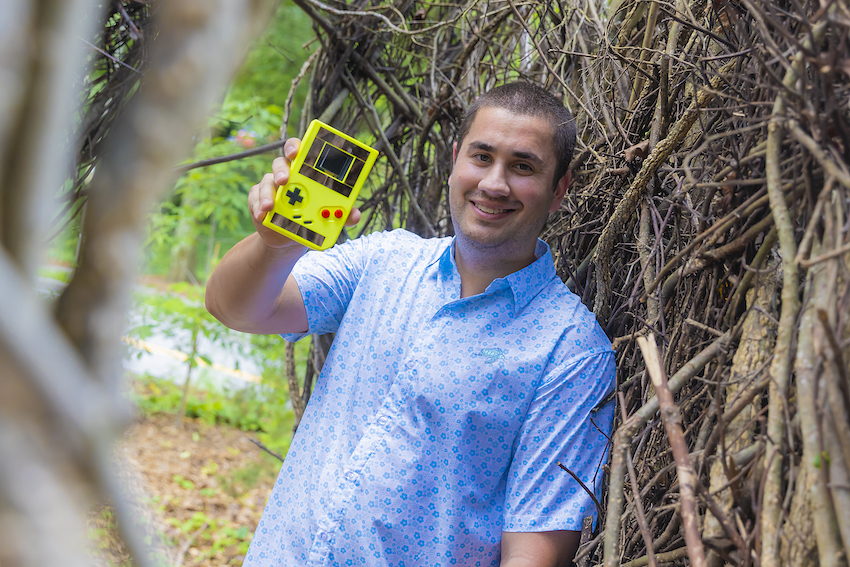
Terracell is roughly the size of a paperback book and uses microbes found in soil to generate energy for low-power applications. 

Previous designs for soil microbial fuel cells required water submergence or saturated soil. Terracell can function in soil with a volumetric water content of 42%

Terracell placed in Fast Company’s list of the best sustainability-focused designs of 2024.

Researchers at Northwestern University lead the multi-institution research team that designed Terracell.

Josiah Hester, an associate professor in Georgia Tech's School of Interactive Computing who previously worked at Northwestern, directs the Ka Moamoa Lab, where the project was conceived. 

The team includes researchers from Northwestern, Georgia Tech, Stanford, the University of California-San Diego, and the University of California-Santa Cruz.

Their research was published in January in the Proceedings of the Association for Computing Machinery on Interactive, Mobile, Wearable, and Ubiquitous Technologies. The researchers will also present this work at the ACM international joint conference on Pervasive and Ubiquitous Computing (Ubicomp), Oct. 5-9.

According to the Fast Company website, the Innovation by Design Awards recognize “designers and businesses solving the most crucial problems of today and anticipating the pressing issues of tomorrow.” Winners are published in Fast Company Magazine and are honored at the Fast Company Innovation Festival in the fall.

“Terracell could reduce e-waste and extend the useful lifetime of electronics deployed for agriculture, environmental monitoring, and smart cities,” Hester said. “We were honored to be recognized for the design innovation award. It is a testament to the promise of sustainable computing and our hope for a more sustainable world.”

For more information about Terracell, see the story featured on Northwestern Now, or visit the project’s website.

Georgia Tech Associate Professor of Interactive Computing Josiah Hester
 
News Contact

Nathan Deen, Communications Officer
Georgia Tech School of Interactive Computing
nathan.deen@cc.gatech.edu

New Smart Charger May Pave the Way for More EVs

A gold and white charger box in front of a car

The EV smart charger allows users to customize their charging, with the ability to weight preferences for carbon-free energy, cost, charge speed, and battery health. Credit: Allison Carter


In 2024, more than one in five cars sold is an electric vehicle (EV). Intergovernmental agencies estimate that by 2035, half of all new cars sold globally will be EVs

While more EVs on the road sounds like great news for the environment, it could lead to complications. The electric grid is not yet ready to support the EV influx, and unaddressed capacity limitations could threaten the future of the EV industry. 

Researchers at the Georgia Institute of Technology have developed a device to help avoid grid overload: a revolutionary EV smart-charging system. 

Read the story here

 
News Contact

Catherine Barzler, Senior Research Writer/Editor

catherine.barzler@gatech.edu

Laura Taylor Appointed Director of the Energy Policy and Innovation Center

Laura Taylor

After a national search, Laura Taylor has been appointed director of the Energy Policy and Innovation Center (EPICenter) within the Strategic Energy Institute (SEI), effective Nov. 1. 

“We are very excited to build on the existing strength of EPICenter, moving it toward recognition as a top ten energy think tank and a major recruiting draw for new faculty in the IAC and across the university,” said Christine Conwell, interim executive director of SEI. “We hope Laura’s leadership will help launch a new era for EPICenter and strengthen its support of the outstanding faculty and students conducting rigorous energy policy research across campus.”

"I’m thrilled to join EPICenter and the SEI leadership team,” said Taylor. “Thanks to our home within the No. 1 public university in the country for energy research, EPICenter is uniquely positioned to lead applied energy policy research and engagement in the Southeast, helping to drive Georgia and our region forward as a national leader in innovation and policy for a sustainable energy future.”

During Taylor’s time as chair, the School of Economics doubled its faculty with 19 new faculty members, and the number of students pursuing a major in economics increased by more than 50%. Economics also expanded its teaching and research in several areas including health, energy, environment, globalization, theory, and data analytics. The School’s bachelor’s, master’s, and Ph.D. programs achieved federal STEM designation in 2019, reflecting the curriculum’s tech-centered approach to liberal arts education and emphasis on using mathematical and statistical models. The School’s undergraduate economics program ranked No. 1 among public universities in Georgia and No. 21 among public universities nationally in the 2025 U.S. News & World Report Best Colleges rankings.

“It’s been an amazing six years working with the exceptional students, faculty and staff in the School of Economics. I look forward to continuing to contribute to the School in new ways while leading EPICenter,” added Taylor. 

Haizheng Li, professor and the School’s current associate chair, will serve as interim chair of the School of Economics beginning Nov. 1. Ivan Allen College of Liberal Arts expects to launch an international search for the new chair of the School of Economics in academic year 2025-2026, after the College’s new dean is appointed.

“The School of Economics has thrived and grown under Dr. Taylor’s outstanding leadership,” said Richard Utz, interim dean of the Ivan Allen College of Liberal Arts. “The School is very fortunate to have benefited from her guidance. I am confident Dr. Li will keep that momentum going and will help the school effectively navigate the leadership transition.”

Taylor has 30 years of experience in research, outreach, and policy engagement in the Southeast. Her work uses economic tools to improve environmental and energy systems management and policy. She also has research and policy experience focused on the intersection of energy systems and human health, water resource management, and land use. She has held numerous advisory board positions and is an elected fellow and past president of the Association of Environmental and Resource Economists. 

Taylor’s research has received funding from a variety of sources, including the U.S. Environmental Protection Agency, U.S. Department of Agriculture, U.S. Department of Interior, and the National Science Foundation. 

About EPICenter

The mission of the Energy, Policy, and Innovation Center is to conduct rigorous studies and deliver high impact insights that address critical regional, national, and global energy issues from a Southeastern U.S. perspective. EPICenter is pioneering a holistic approach that calls upon multidisciplinary expertise to engage the public on the issues that emerge as the energy transformation unfolds. The center operates within Georgia Tech’s Strategic Energy Institute.

 
News Contact

Innovation at Scale: Georgia Tech Unveils New Roll-to-Roll Manufacturing Pilot Facility

Partners of the facility gathered for an official ribbon cutting ceremony.

Partners of the facility gathered for an official ribbon cutting ceremony. From left to right: Eric Vogel, Hightower Professor in MSE and executive director for the Institute for Matter and Systems; Devesh Ranjan, Eugene C. Gwaltney, Jr. school chair and professor in the George W. Woodruff School of Mechanical Engineering; Julia Kubanek, vice president of Interdisciplinary Research; Tequila Harris, professor in the Woodruff School and facility leader; Christine Conwell, interim executive director for the Strategic Energy Institute; Tim Liewen, interim executive vice president for Research; Thomas Kurfess, Regent's Professor in the Woodruff School and executive director of the Georgia Tech Manufacturing Institute; J. Carson Meredith, professor and James Preston Harris Faculty Fellow in the School of Chemical and Biomolecular Engineering, executive director of the Renewable Bioproducts Institute. Photo: Christopher McKenney.

Whether it’s developing new products, reducing costs, or increasing accessibility, innovations in manufacturing stand to improve the lives of companies and consumers alike. Georgia Tech recently took another step toward ensuring those innovations make it from lab to market with the launch of a Modular Pilot Scale Roll-to-Roll Manufacturing Facility. 

“As researchers develop new materials, one of the key aspects we’re missing is how to make them at scale. This is a major oversight because if we can’t make them at scale, we can’t transition from basic research to commercialization,” said Tequila Harris, a professor in the George W. Woodruff School of Mechanical Engineering. “With this new facility, we can prove our discoveries beyond lab-scale studies — and can go from materials innovation to product development at scale.”

Led by Harris, the new facility is the result of a partnership between the Georgia Tech Manufacturing Institute (GTMI), the Strategic Energy Institute, and the Woodruff School. As a pilot facility, it will serve as a testbed for scaling up manufacturing research open for Georgia Tech researchers as well as academic, government, and industry partners around the world.

“The larger vision I see at Georgia Tech involves innovation in manufacturing for large-scale industries,” said Georgia Tech’s Interim Executive Vice President for Research Tim Lieuwen at the facility’s unveiling event on Sept. 19. “It’s crucial that we’re innovating in basic science and technology, but we also need to be innovating in large-scale manufacturing.”

Roll-to-roll (R2R) manufacturing transforms flexible rolls of substrate materials, such as paper, metal foils, and plastics, into more complex, transportable rolls upon coating the surface with one or more fluids, such as inks, suspensions, and solutions, which are subsequently dried or cured on the base substrate. Its high yield and efficiency make R2R an ideal method for the sustainable, large-scale production of components for solar cells, batteries, flexible electronics, and separations — all industries that have expanded in Georgia in recent years.

“As a state institution, we’re ultimately here to serve our state,” said Lieuwen, who is also Regents’ Professor and David S. Lewis Jr. Chair in the Daniel Guggenheim School of Aerospace Engineering. “We’re seeing Georgia emerge as the national leader in terms of recruiting corporate investments in this space and in industries that will be served by this facility.”

Roll-to-Roll Innovations

The R2R process is similar to the production of newspapers, where a large roll of blank paper goes through a series of rollers printing text and photos. “The roll-to-roll aspect is the process of using a specialized tool to force fluid onto a moving surface,” says Harris. It’s one of the fastest-growing methods for producing thin film materials — photovoltaics used in solar cells, transistors in flexible electronics, and micro-batteries, for example — at a large scale. 

Harris’s group works to develop novel manufacturing tools, with a particular focus on understanding and improving the dynamics of thin film manufacturing to increase efficiency and minimize waste. Her group is particularly interested in slot die coating, an R2R technique where a liquid material is precisely deposited onto a substrate through a narrow slot. With the new pilot facility, researchers like Harris will be able to take their work to the next level.

“Slot die coating on a roll-to-roll can handle the broadest viscosity range of most coating methods. Therefore, you can process a lot of different materials very quickly and easily,” says Harris. “It’s one of the fastest-growing technologies in the U.S. — and currently, this is the most advanced modular pilot scale facility at an academic university in the United States.”

“Georgia Tech is way ahead of the curve in terms of our facilities,” says GTMI Executive Director and Regents’ Professor Thomas Kurfess. “This will grow our capability in the battery area, membranes, flexible electronics, and more to allow us to support the development of new technologies.”

“As technologies around cleantech continue to advance at an unprecedented pace, pilot manufacturing facilities provide a critical bridge between innovative benchtop research and commercial-scale production and manufacturing,” says Christine Conwell, interim executive director of the Strategic Energy Institute. “We are excited about the opportunities this R2R facility will provide to the Georgia Tech energy community and our industry partners.”

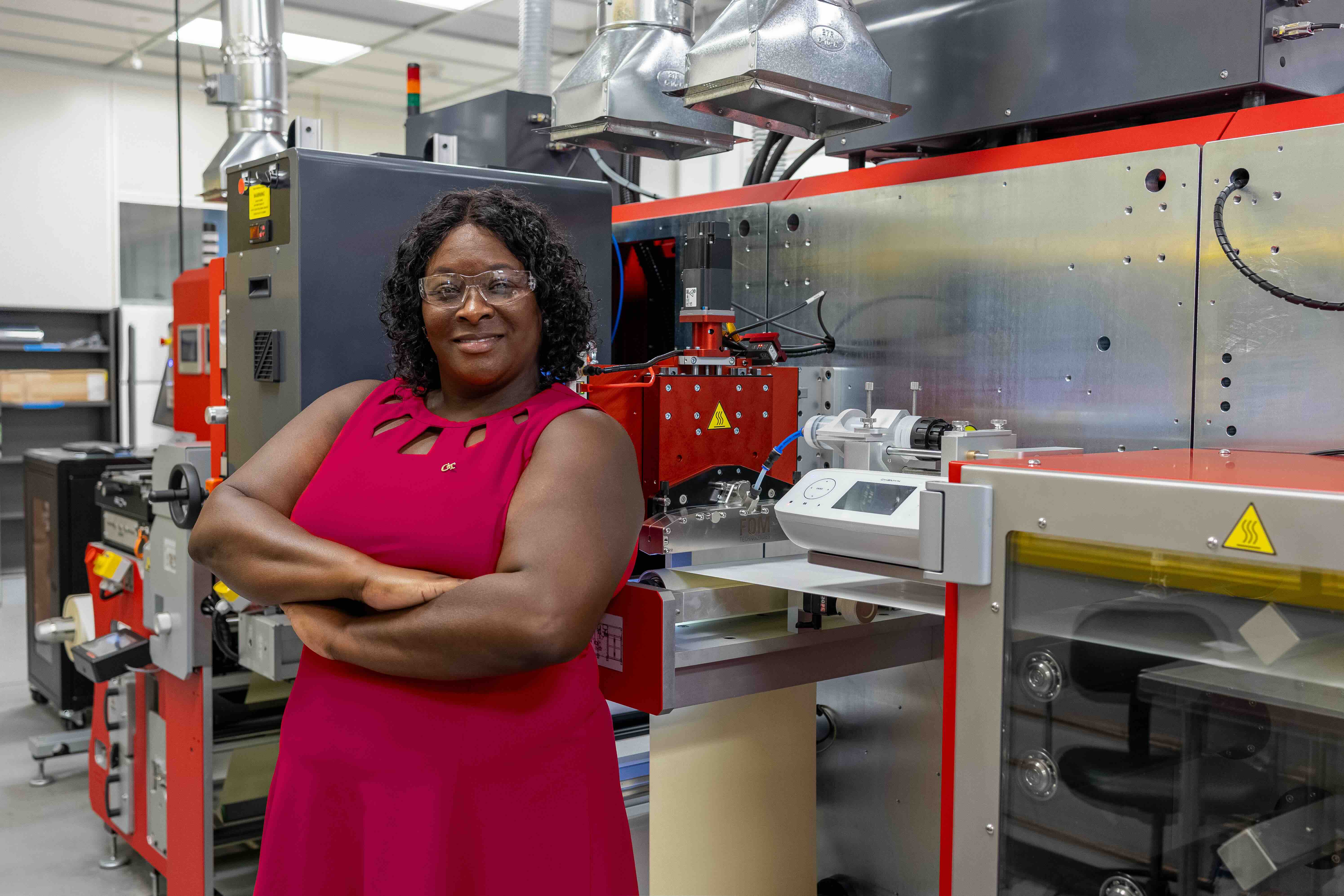
Tequila Harris, professor in the George W. Woodruff School of Mechanical Engineering, next to the modular R2R equipment. Photo: Christopher McKenney.

Tequila Harris, professor in the George W. Woodruff School of Mechanical Engineering, next to the modular R2R equipment. Photo: Christopher McKenney.

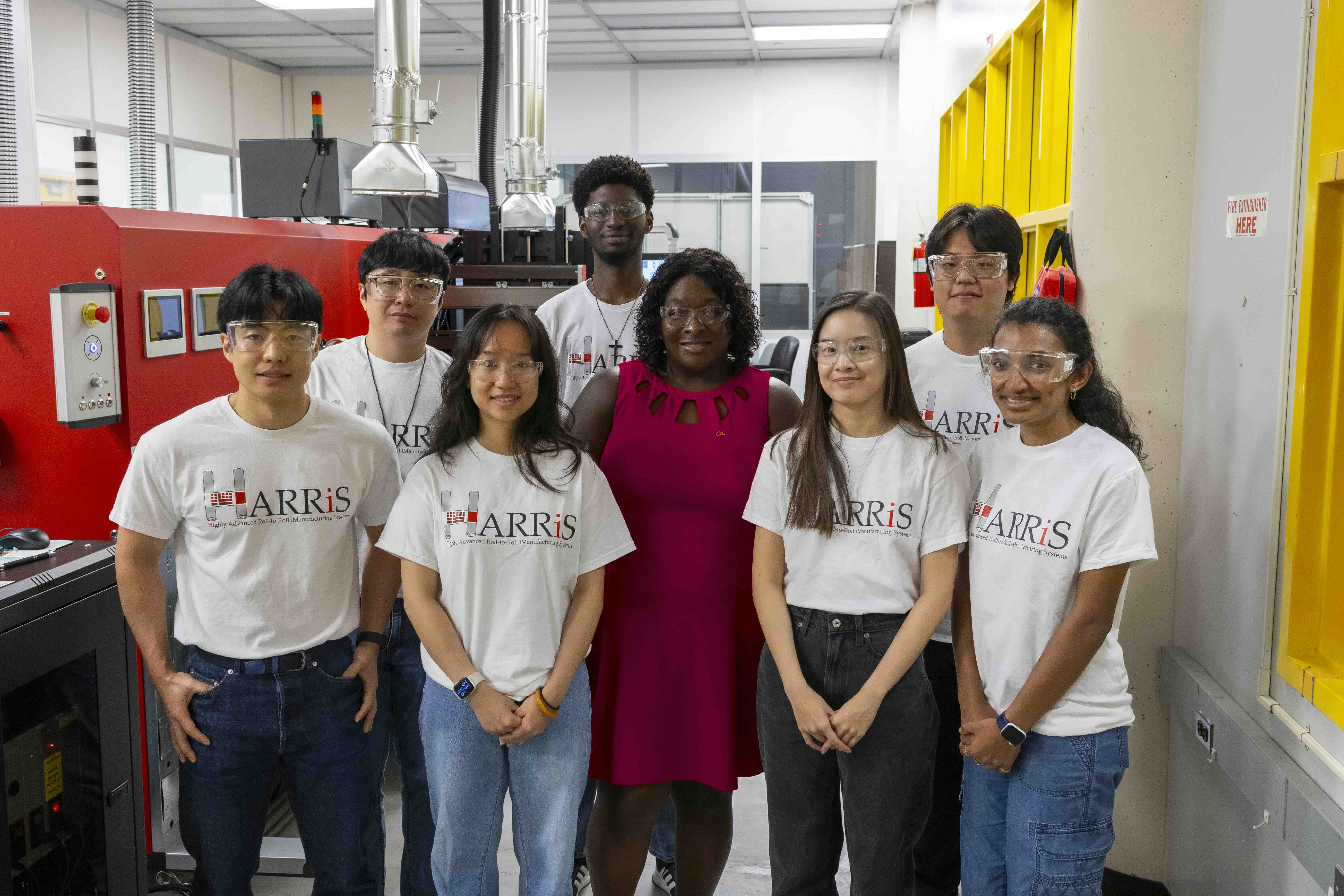
The Highly Advanced Roll-to-Roll iManufacturing Systems (HARRiS) research group in the new R2R facility. Photo: Christopher McKenney.

The Highly Advanced Roll-to-Roll iManufacturing Systems (HARRiS) research group in the new R2R facility. Photo: Christopher McKenney.

 
News Contact

Audra Davidson
Research Communications Program Manager
Georgia Tech Manufacturing Institute

BBISS Executive Director Search

Tech Tower against the Atlanta skyline.


Please visit this page for up-to-date information about the progress of this search.

The Georgia Institute of Technology (Georgia Tech) invites applications and nominations for the Executive Director (ED) position in the Brook Byers Institute for Sustainable Systems (BBISS). BBISS, one of Georgia Tech’s Interdisciplinary Research Institutes (IRIs), brings together researchers from across Georgia Tech, including academic and research units, to support world-class sustainability-focused research, student engagement, and industry, government, and nonprofit collaboration toward achieving systemic change.

The BBISS ED will be a dynamic, collaborative, and entrepreneurial leader who will unite a broad range of stakeholders around a vision to elevate and grow sustainability at Georgia Tech. As a systems thinker and inclusive relationship builder, the ED will expand and enhance BBISS collaborations and partnerships within and beyond Georgia Tech to broaden its sustainability footprint in local, regional, national, and international arenas.

The ED will catalyze the formation of interdisciplinary teams to support high-impact programming and grants in areas such as climate science, solutions, and policy; ecosystem and environmental health; sustainable cities and infrastructure; sustainable resource and material use; just and equitable sustainable development; and the economics and business of sustainability.

View the job description

Applications, Inquiries, and Nominations

To apply for the Executive Director position in the Brook Byers Institute for Sustainable Systems, candidates are requested to submit the following:

  • A curriculum vitae
  • A letter of interest (not to exceed four pages) that summarizes your qualifications and includes a brief statement of your vision for BBISS
  • Contact information for five references (to be contacted with candidate’s permission at a later date)

Candidates are requested to send their application materials (in Word or PDF) to the AGB Search Portal at this link by November 19, 2024, for best consideration.

Nominations and expressions of interest for this opportunity are encouraged. Please direct them to BBISSGATech@agbsearch.com or to the AGB search consultants listed below.

Monica Burton, Principal
monica.burton@agbsearch.com
C: 917.825.2961

Nancy Targett, Ph.D., Executive Search Consultant
nancy.targett@agbsearch.com
C: 302.233.5202

 
News Contact

Brent Verrill, Research Communications Program Director, BBISS