
Investigating Transdisciplinary Approaches for Community-engagement
Foad Hamidi
Assistant Professor
Information Systems Department
Algorithmic Scenario Generation As Quality Diversity Optimization
This talk is part of the GVU Brown Bag Seminar Series brought to you by the Institute for People and Technology at Georgia Tech.
Speaker: Stefanos Nikolaidis, Ph.D., Assistant Professor of Computer Science at the University of Southern California
Date: 2023-11-09 12:30 pm
Location:
Technology Square Research Building (TSRB, 1st Floor Ballroom)
85 Fifth Street NW
Atlanta, GA 30308
Foley Scholars 2023 Winners and Finalists
Oct 31, 2023 —

Foley Scholar winners 2023 Arianna Mastali and Karthik Seetharama Bhat.
The Foley Scholar Awards recognize the achievements of top graduate students whose vision and research are shaping the future of how people interact with and value technology. Winners and finalists for the 2023 Foley Scholar Award were celebrated at Georgia Tech’s hotel and convention center on October 30, 2023. The event was hosted by the Institute for People and Technology with its executive director, Michael Best, serving as the master of ceremonies as each finalist was recognized for their innovative research. James Foley, professor emeritus and for whom the awards are named for, joined in the evening’s festivities to celebrate the achievements of all finalists.
“Congratulations to the two awardees and all the finalists who represent the best that Georgia Tech has to offer,” said Michael Best. “Departing from previous years, this year we only awarded two prizes making them even more precious. Next year we will return to awarding multiple prizes among the finalist,” said Best.
Congratulations to the newly named Foley Scholars for 2023-2024 who are:
- Karthik Seetharama Bhat, Ph.D. student in Human-Centered Computing, in the
in the doctoral category who was awarded $5,000. - Arianna Mastali, master’s student in Human-Computer Interaction, in the
master’s category who was awarded $1,000.
The finalists in the Ph.D. category were Karthik Seetharama Bhat, Arpit Narechania, Sachin Pendse, and Alexandra Teixeira Riggs.
The finalists in the master’s category were Arianna Mastali and Josey Benandi.
A short description of each finalists’ unique research along with their Georgia Tech faculty advisor is listed below:
Karthik Seetharama Bhat is a Ph.D. student in Human-Centered Computing and is advised by Neha Kumar. Bhat’s research explores the future of carework by studying how emerging technologies can support and augment caregiving interactions and relationships. His research examines telehealth efforts in India to understand technology adoption for formal and informal caregiving across socioeconomic, geographic, and cultural boundaries. He is designing new technologies and technology-aided workflows as probes into the potential futures of telehealth. He is also examining the role that emerging AI and data-driven technologies (like conversational agents) could play in informal care environments. He has partnered with ARMMAN—a Mumbai-based NGO that is employing mHealth technologies towards improving maternal and child health outcomes through information provision and care delivery to pregnant women and new mothers. He is also working on the design and deployment of a chatbot that can perform automated tasks that reduce burdens on community health workers who moderate a chat-based online health community for maternal and child health. This is a collaborative study with researchers at IIIT Delhi, India, and SWACH Foundation—an NGO in Haryana, India, that runs multiple WhatsApp-based online health communities for maternal and child health, serving thousands of pregnant women and new mothers from rural and urban regions of north India.
Arpit Narechania is a Ph.D. student in Computer Science, advised by Alex Endert. Narechania designs mixed-initiative, guidance-enriched interfaces that facilitate visual communication of appropriate and timely guidance between users and systems, and promotes the design of new visualization tools for enhanced human-data experiences from data preparation through analysis. He also develop tools that augment visualization interfaces with the querying power of natural language. A recent team research project of his examined how misrepresentation using fertility maps could change how funds are distributed to different locales and how people perceive the state of fertility in India. This project involved 16 cartographers and GIS experts from 13 global organizations such as the World Bank, UN, NASA, CDC. His team findings revealed that even the most expert map-makers find choosing appropriate binning methods challenging; this is due to limited knowledge, lack of awareness of harmful implications of using arbitrary binning methods, and organizational protocols conflicting with cartographic principles and map-maker’s preferences. His research team invented “Resiliency”, a new “goto” binning method. As a result of this research, the World Bank invited him, Dr. Clio Andris, and Dr. Alex Endert [fellow team members] to give a talk, and the United Nations offered to integrate this new map-making method into their website.
Sachin Pendse is a Ph.D. student in Human-Centered Computing and is advised by Munmun De Choudhury and Neha Kumar. Pendse is addressing mental health challenges and the positive role that technology can play. There are diverse and effective approaches to treating mental health concerns, but the process of being diagnosed and finding care can be extremely intimidating. Individuals in distress are confronted with diverse barriers, including the stigma associated with being labeled as mentally ill, the trial-and-error process of determining the medication or forms of therapy that work best for an individual, and economic or cultural factors that limit access. Navigating the pathway to care can be an ordeal as taxing as the experience of mental illness itself. He is working to better understand where technology-mediated support may be able to reduce and eliminate mental health-related barriers. He examines the role that identity and culture play in how people experience distress, and studies people from diverse backgrounds, including people in geographically sparse areas, people with limited financial means to access care, and people from minority backgrounds. He is using a mixed methods approach to understand the role that technology-mediated mental health support systems (such as helplines, online support communities, or Google search results) play in helping connect individuals in distress with effective, culturally valid support as they journey upon a pathway to care.
Alexandra Teixeira Riggs is a Ph.D. student in Digital Media, advised by Anne Sullivan. One of Riggs’s research projects, entitled “Button Portraits: Embodying Queer History with Interactive Wearable Artifacts,” is a wearable experience that explores Atlanta’s queer history using artifacts from the Gender and Sexuality Collections at Georgia State University. The project uses archival buttons from the collection to reveal oral histories of two Southern queer activists, linking the activists’ own objects to specific audio fragments. As a case study, “Button Portraits” offers insights on how wearability, embodiment, and queer archival methods can shape the design and experience of tangible historical narratives and their ability to call for reflection on our relationships to archival materials and history. By designing tangible experiences that center around queer community, history, and identity, she hopes to continue to express, loudly and proudly, that queer and trans people have always existed and will continue to exist, and that the design of technology, importantly, must center these histories, communities, and identities.
Arianna Mastali is a master’s student in Human-Computer Interaction, advised by Melody Jackson. Mastali has been working on a wearable activity and gait detection monitor for sled dogs and other canine athletes, called WAG’D. During her last undergraduate semester, she discovered the field of animal-centered computing. The WAG’D device consists of an IMU and a load cell and is focused on measuring gait anomalies and pull force in order to minimize injuries within sled dog racing. Her research team conducted several interviews with mushers and veterinarians who have been a part of the Iditarod in order to learn about the most common injuries in sled dogs and the existing methods to detect them. This work has significance as it will not only help better detect injuries, but will help dog owners and veterinarians better monitor dogs in order to prevent injuries.
Josey Benandi is a master’s student in Human-Computer Interaction, advised by Agata Rozga. Benandi is currently working on a project called the Care Coordination Study, which is funded by the AI-CARING Institute through the National Science Foundation. This project involves conducting qualitative research in the form of semi-structured interviews with people diagnosed with Mild Cognitive Impairment and their informal caregivers, so that we may better understand how these folks manage their day-to-day activities, what challenges they face in doing so, and how they go about overcoming those challenges. The Care Coordination Study has been a joint effort between myself, Dr. Agata Rozga, Dr. Tracy Mitzner, and other students, where Josey has taken the lead role in all research activities. She is seeking to create a qualitative codebook of the findings which will serve as a guide for other researchers within AI-CARING and beyond whose work may require precedent real-world data regarding the experiences of those diagnosed with and those coordinating care for those diagnosed with Mild Cognitive Impairment.
About the James D. Foley Endowment
The James D. Foley Endowment, established in 2007, is named for Dr. James D. Foley, professor and founder of the GVU Center (now integrated with IPaT as of January, 2023) at Georgia Tech. The award was established by Dr. Foley's colleagues and GVU alumni to honor his significant contributions in the field of computing, his influence on the work of others, and his dedication to the development of new research directions.
Funds from the Foley Endowment are used to support the students and research activities of the Institute for People and Technology (IPaT), including the Foley Scholars Fellowships, awarded annually to two graduate students on the basis of personal vision, brilliance, and potential impact. Foley Scholars are selected by an advisory board comprised of alumni, current faculty, and industry partners during the fall semester.
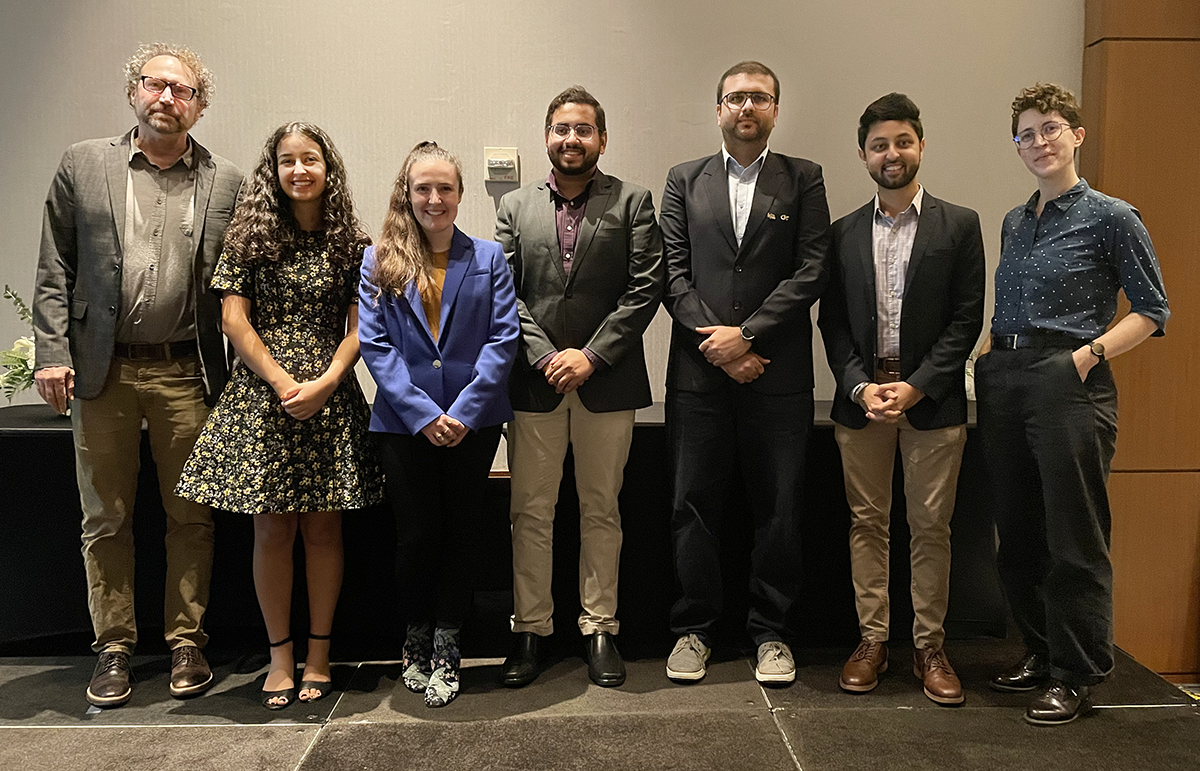
Foley Scholar 2023 Finalists with Michael Best, IPaT's executive director (far left). Then left-to-right are Arianna Mastali, Josey Benandi, Karthik Seetharama Bhat, Arpit Narechania, Sachin Pendse, and Alexandra Teixeira Riggs.
IPaT Awards Seed Funding to Five Research Projects
Oct 24, 2023 —

IPaT Seed Grant Winners 2023
The Institute of People and Technology at Georgia Tech (IPaT) co-sponsored more than $70,000 in grant awards to five research projects. The other research co-sponsors were the Georgia Tech Research Institute (GTRI) and the Institute for Data Engineering and Science (IDEaS). The IDEaS grant also involved other interdisciplinary research co-sponsors at Georgia Tech. A complete list of IDEaS awardees are listed here.
“Congratulations to this year’s grant awardees, which bring together a diverse set of scholars advancing important new lines of interdisciplinary inquiry,” said Michael Best, executive director of IPaT. “The funded projects in the arts, assistive healthcare, AI, and beyond will further Georgia Tech’s impact at the intersections of people and technology.”
The goal of the IPaT/GTRI co-sponsored research and engagement grants for 2023-2024 is to promote research activities involving faculty and students from many disciplines represented in IPaT. Five winning projects were selected based on their early-stage research which have a high probability of leading to extramural funding and include a strong interdisciplinary component. Engagement grants are also designed to foster new engagements and collaborations, whether internal or external to Georgia Tech.
The goal of the IPaT/IDEaS co-sponsored research include identifying prominent emerging research directions on the topics of artificial intelligence (AI), shaping IDEaS future strategy in this initiative area, and building an inclusive and active community of Georgia Tech researchers. Proposals could include external collaborators, identifying and preparing groundwork for competing in large-scale grant opportunities in AI, and AI use in other research fields.
Congratulations to the winning project teams listed below:
Proposal title: Artificial Intelligence Based Abstract Review Assistant (AIARA)
Team members: Michael Cross, research scientist, GTRI; Paula Gomez, senior research engineer, GTRI; Mark Riedl, professor, associate director of the Georgia Tech Machine Learning Center, School of Interactive Computing
Award and sponsors: $20,000 (IPaT/GTRI)
Overview: Scientific committee members are promoting the use of artificial intelligence tools such as Google’s BARD and OpenAI’s Chat GPT to help with the blind review process to support the peer review process such as articles submitted for annual science-related conferences. Considering that the peer review process is made up of well-structured tasks that include analysis of a set number of abstract components (title, keywords, structure, outcomes, references) or paper components (the introduction, methods, results, discussion, length, clarity and structure), peer review is an excellent candidate for trained AI to address topics such as duplicate submissions, self-plagiarism, incomplete reviews, comment quality assessment, and the overall standardization of scores for the final selection of articles.
Proposal title: Toward Fairer Diagnosis and Care of Type 2 Diabetes: A Long-Term and Pipeline-Level View
Team members: Gabriel Garcia, assistant professor in the H. Milton Stewart School of Industrial and Systems Engineering; Juba Ziani, assistant professor in the H. Milton Stewart School of Industrial and Systems Engineering; Jovan Julien, postdoctoral fellow, Harvard Medical School
Award and sponsors: $16,034 (IPaT)
Overview: Type-2 Diabetes Mellitus (T2DM) is one of the most common chronic diseases in the United States, affecting about 10% of Americans. While T2DM is irreversible, its early disease stages – i.e., pre-diabetes – are reversible. Accordingly, early screening, detection, and treatment are critical to reducing the rates of progression to T2DM and mitigating the adverse effects of T2DM among those who already have it. Yet, in the United States, T2DM can often go undetected until its later stages with each missed detection stage leading to worsening health outcomes and increasing financial burden. Further, people from disadvantaged and underserved groups often face lower access to care, leading to more missed detection and greater downstream disease burden. In this research, our goal is to build a mathematical model to optimize investments across screening and treatment resources while reducing disparities across disadvantaged populations.
Proposal title: ASTRO! - Manysourcing the Design and Behavior of Future Robotic Guide Dogs
Team members: Bruce Walker, professor, School of Psychology and School of Interactive Computing
Award and sponsors: $15,375 (IPaT)
Overview: ASTRO! is an interdisciplinary collaborative project to engage many people in the ideation and creative design of future robotic guide dogs. As the technology and engineering advance towards a robotic assistant, we also must consider design and human-robot interaction issues. We will ask many people--through interviews, focus groups, and surveys--what capabilities a robotic guide should have. We will also ask how they should look and feel. We will consider how they will behave. And finally, we will investigate how humans and robotic assistants will communicate. Students in many classes at Georgia Tech and beyond will study various aspects of this research and design challenge. We will also host a weekend “design-a-thon” for ideating and brainstorming robot designs and interaction patterns, and crafting up all kinds of prototypes and mockups. The outcomes of this project will influence the design of robotic assistants, and more broadly will help us design advanced technology so it is accepted into society.
Proposal title: Data-Driven Platform for Transforming Subjective Assessment into Objective Processes for Artistic Human Performance and Wellness
Team members: Milka Trajkova, research scientist, School of Literature, Media, and Communication; Brian Magerko, professor, School of Literature, Media, and Communication
Award and sponsors: $15,000 (IPaT/IDEaS)
Overview: Artistic human movement at large, stands at the precipice of a data-driven renaissance. By leveraging novel tools, we can usher in a transparent, data-driven, and accessible training environment. The potential ramifications extend beyond dance. As sports analytics have reshaped our understanding of athletic prowess, a similar approach to dance could redefine our comprehension of human movement, with implications spanning healthcare, construction, rehabilitation, and active aging. Georgia Tech, with its prowess in AI, HCI, and biomechanics is primed to lead this exploration. To actualize this vision, we propose the following research questions with ballet as a prime example of one of the most complex types of artistic movements: 1) What kinds of data - real-time kinematic, kinetic, biomechanical, etc. captured through accessible off-the-shelf technologies, are essential for effective AI assessment in ballet education for young adults?; 2) How can we design and develop an end-to-end ML architecture that assesses artistic and technical performance?; 3) What feedback elements (combination of timing, communication mode, feedback nature, polarity, visualization) are most effective for AI- based dance assessment?; and 4) How does AI-assisted feedback enhance physical wellness, artistic performance, and the learning process in young athletes compared to traditional methods?
Proposal title: Voice+: Locating the Human Voice in a Technology-Driven World
Team members: Andrea Jonsson, assistant professor, School of Modern Languages; Stuart Goldberg, associate professor, School of Modern Languages
Award and sponsors: $3,800 (IPaT)
Overview: The Voice + Research Lab is an Interdisciplinary Voice Studies Lab that explores the human voice from a variety of perspectives and integrates knowledge and methodologies from different disciplines. It encompasses a wide range of topics related to the voice, including vocal production, vocal health, cultural and historical aspects of vocal expression, and the artistic and expressive use of the voice. Interdisciplinary voice studies aim to provide a holistic understanding of the voice and its multifaceted aspects, fostering collaboration among experts in various fields to explore sound and structures of the human voice.
Rehabilitation Engineering Research Center on Aging With Disability Renews Grant
Oct 23, 2023 —

Smart Bathroom
In the United States, 46% of Americans 75 and older and 24% of those 65 to 74 report having a disability, according to estimates from the Census Bureau’s 2021 American Community Survey.
Projects associated with the Rehabilitation Engineering Research Center (RERC) on Technologies to Support Aging Among People With Long-Term Disabilities, also known as “TechSAge,” are exploring the potential of technology to support people aging with disabilities.
TechSAge recently received a $4.6 million grant from the National Institute on Disability, Independent Living, and Rehabilitation Research to support another five years of work — the project’s third five-year grant.
“We aren’t starting from scratch,” said Elena Remillard, TechSAge project coordinator who also serves as the site principal investigator for Georgia Tech. “Our team has spent years establishing an infrastructure of research resources, like our participant registry, building technology prototypes, and contributing to the limited knowledge base on aging with disability. We’re ready to dive into the research.”
TechSAge projects include a Smart Bathroom developed to optimize the environment for safe transfers by individuals with limited mobility, a Zoom-based tai chi exercise program, fall detection devices for wheelchair users, robotic showers, wayfinding robots, and rehabilitation training programs.
The goal of TechSAge is to meet the needs of people aging with long-term disabilities where they live, work, and play by conducting advanced engineering research and developing innovative technologies. “It’s about more than meeting basic needs at home,” Remillard said. “People with disabilities are living longer, working longer, and should be able to continue engaging in all the activities they need and want to do. We’re developing user-centered tech solutions to support a wide range of everyday activities, from self-care to exercise.”
TechSAge started at Georgia Tech 10 years ago, first led by Tech faculty members Jon Sanford, Wendy Rogers, and Tracy Mitzner as co-directors. Today, the RERC is a multi-site center including faculty from Georgia Tech, the University of Illinois Urbana-Champaign, and Georgia State University.
The current project director is Laura Rice, associate professor of kinesiology and community health at Illinois. The leadership team includes Sanford, now research professor of occupational therapy at Georgia State; Rogers, now professor of kinesiology and community health at Illinois; Mitzner, principal research scientist at Person in Design; and Remillard, senior research scientist at the Center for Inclusive Design and Innovation in the College of Design at Georgia Tech.
The research projects engage students at all levels, including undergraduates, graduates, and postdocs, and emphasize training in universal design and accessibility.
Over the last five years, the team has focused on ramping up their interventions and technology solutions to assist older adults with long-term disabilities. Sanford and Georgia Tech researcher Brian Jones have spearheaded the smart bathroom utilizing Georgia Tech’s Aware Home, directed by Jones and supported by Georgia Tech’s Institute for People and Technology. It is a three-story, 5,000-square-foot facility designed to facilitate research and develop innovations in a controlled home environment.
“We developed the smart bathroom to explore how the bathroom environment should automatically adjust to the changing needs of older adults with disabilities over the course of a day or the long term. That goal requires real-time measurement as a user approaches the bathroom and as they interact with the bathroom environment and fixtures during the process of transferring on and off the toilet, or into and out of the bathtub, or shower,” said Jones.
“We have instrumented the space with sensors in the floor, the toilet seat, and the grab bars used for toilet transfer or bathing. We have designed everything to allow for lots of flexibility in the environment, which allows users to adjust the fixtures to their preferences. The Aware Home at Georgia Tech is a valuable resource for this research. During this next phase of funding, we will advance our bathroom transfer studies while further automating the smart bathroom environment and repackage some of the components to move into real homes with a long-term goal of reducing falls.”
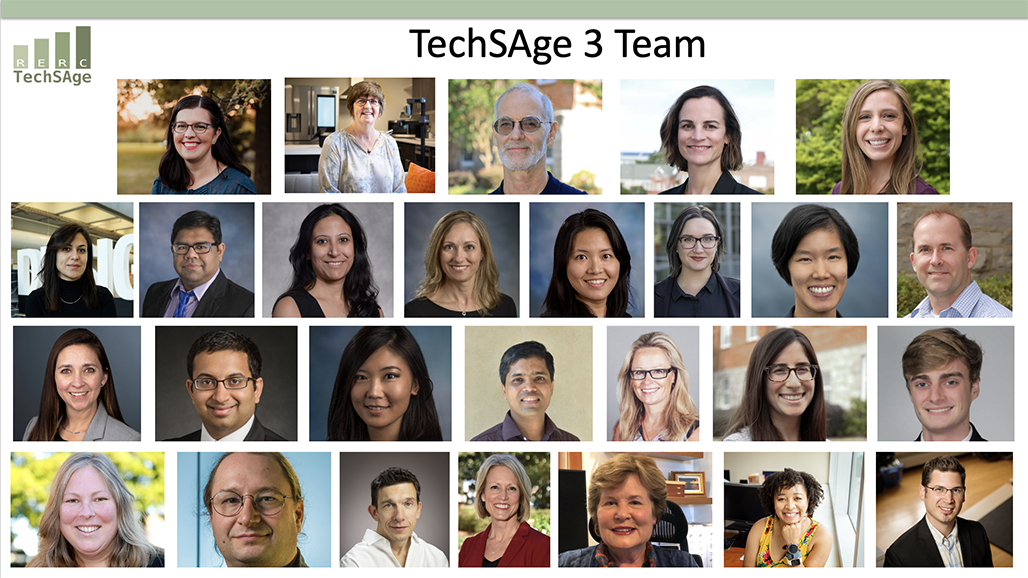
TechSAge Team Members
Augment, Diminish, Remap Reality: Freeing the Mind and its Resources
Institute of People and Technology
DISTINGUISHED ALUMNUS LECTURE
Anne Collins McLaughlin
Professor, Department of Psychology
North Carolina State University
Title: Augment, Diminish, Remap Reality: Freeing the Mind and its Resources
Measure and Manage Trust in Human-AI Conversations
This talk is part of the GVU Brown Bag Seminar Series brought to you by the Institute for People and Technology at Georgia Tech.
Speaker: Mengyao Li, Ph.D., Assistant Professor in the School of Psychology at Georgia Tech
Date: 2023-10-12 12:30 pm
Location:
Technology Square Research Building (TSRB, 1st Floor Ballroom)
85 Fifth Street NW
Atlanta, GA 30308
Supporting Research Across IPaT Labs
Sep 26, 2023 —

Tim Trent
Tim Trent is known at Georgia Tech’s Institute for People and Technology (IPaT) for his dedicated and enthusiastic research, operations, and makerspace support. Last year, Trent, a faculty member of IPaT and a computer science graduate of Georgia Tech, helped unveil the Craft Lab, Georgia Tech’s newest makerspace — and one of several makerspaces he manages. The Craft Lab, located in the Technology Square Research Building (TSRB) Room 225B, is a unique makerspace that offers students hands-on industrial tools to delve into computational craft, e-textiles, and soft electronics. The equipment in the lab is particularly well-suited for wearable and flexible electronic systems and making soft goods.
“The Craft Lab is a new makerspace launched during GVU’s 30th anniversary. What is exciting to me is that we’ve gathered crafting tools and industrial precision machines in a single location,“ said Trent. “I have never seen a makerspace at Georgia Tech with the types of capabilities we have concentrated in our new lab.”
Trent also supports the IPaT/GVU prototyping lab. This lab houses 3D printers, a waterjet, CNC mills, CNC Router, saws, metal grinders, drill press, and other tools found in traditional makerspaces including surface-mount printed circuit board production and silk screening. The prototyping lab is located in the TSRB basement, Room S21.
“The Craft Lab has industrial machines that can really help folks when they have gotten past the initial prototype stage of their research,” said Trent. “For example, if someone needed to make 100 versions of something like sensor embedded clothing to deploy it, being able to have the speed and consistency of our industrial sewing machines could be critical to meet research timelines and prototype creation needs.”
In addition to managing laboratories, Trent provides diverse operational support for IPaT that spans audiovisual services, website management and programming, and event support.
“Tim is an asset to IPaT and the IPaT community. He never hesitates to assist in any capacity,” said Cynthia Moore, assistant director for business operations for IPaT. “During our annual Foley Scholars event, Tim was readily available and jumped in where needed, from assisting with A/V needs to providing tours of IPaT's labs. As a research technologist, Tim has become the go-to person for all things lab support, A/V needs, and so much more for IPaT.”
“Tim Trent and his research faculty colleagues at IPaT are a critical component of Georgia Tech’s complex research enterprise,” said Maribeth Gandy Coleman, director of research for IPaT and a Regents’ Researcher.
“The mission of IPaT is to advocate for and support the use of human-centered techniques throughout the research life cycle. Toward this goal, IPaT provides a variety of core facilities and services for the campus community, which spans a wide array of disciplines. Tim’s unique expertise lies at the intersection of technology, human computer interaction, and design coupled with many years of experience in research operations. This skill set allows him to support faculty and students throughout the human-centered design process of user experiences that involve the integration of computing devices with the physical world and objects. Tim helps researchers utilize our lab facilities to create a wide range of prototypes, starting with low fidelity prototypes using cardboards and paper all the way to systems ready for deployment with complex embedded hardware and tangible 3D components."
“He is an experienced human computer interaction researcher, which means that he understands the methods employed by the IPaT community as well as the requirements of systems intended for scientific experiments. Tim’s contributions to Georgia Tech research both catalyze new projects that otherwise might not be possible and amplify their impact, to the benefit of society,” said Coleman.
A Morning With Walt Disney Animation Studios
Sep 26, 2023 —

Panel discussion
On Sept. 22, representatives from Walt Disney Animation Studios visited Georgia Tech to describe career opportunities available with the animation filmmaking division. The event was hosted by the School of Literature, Media, and Communication in the Ivan Allen College of Liberal Arts and Georgia Tech’s Institute for People and Technology (IPaT).
Nicole Méndez Dial, associate manager for school relations, and Erika Becerra, senior recruiter, both from Walt Disney Animation Studios, delivered career information about Disney in a panel format with four Georgia Tech faculty members who have expertise in animation and filmmaking. Joining Dial and Becerra were:
- John Thornton, senior academic professional and director of film and media production, Ivan Allen College.
- Brian Magerko, professor and director of graduate studies in digital media, Ivan Allen College.
- Maribeth Coleman, Regents' Researcher and director of research, IPaT.
- Jay Bolter, professor and director of computational media, Ivan Allen College.
Opening remarks and introductions were delivered by Kelly Ritter, chair of the School of Literature, Media, and Communication. Clint Zeagler, co-director of strategic partnerships with IPaT, ended the event with information and closing remarks.
The discussion started with interdisciplinary collaboration and the future of work in animation and film. It ended with detailed information about animation careers with Walt Disney Animation Studios, including computer graphics, animation, visual effects, storytelling, production, and technology. Disney also stressed the importance of attending SIGGRAPH, the international Association for Computing Machinery's special interest group on computer graphics and interactive techniques, which holds a major conference each year. Dial said that Disney’s animation studios interact with the research community through global collaborations. Their publications can be found here: disneyanimation.com/publications.
Located in California, Walt Disney produced its first animated film, Snow White and the Seven Dwarfs, in 1937. The studio is marking 100 years of animation filmmaking since its inception in 1923.
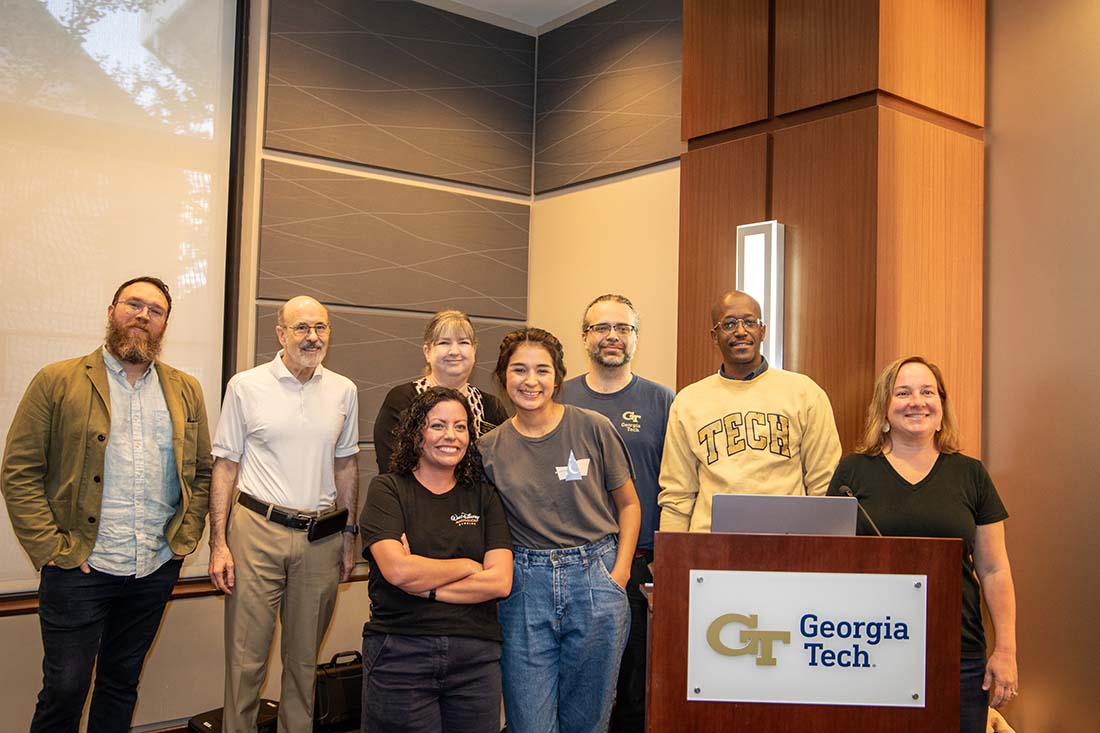
Pictured left to right: Clint Zeagler, Jay Bolter, Nicole Dial, Kelly Ritter, Erika Becerra, Brian Magerko, John Thornton, Maribeth Coleman
Event Announcement: Considering People and Technology
Sep 24, 2023 —

Michael Best
Event Overview
On Aug. 24, the Institute for People and Technology (IPaT) sponsored its first fall program aptly named Considering People and Technology. This large IPaT community event focused on people and technology, past and present, and kicked off with a GVU Brown Bag lecture presented by IPaT's new executive director, Michael Best. His talk was titled, “Considering IPaT: Celebrating the Past and Inventing the Future.”
After the lecture, IPaT offered a tour of its labs, a panel discussion featuring distinguished members of the Georgia Tech community in a continuing discussion about people and technology, and ended with a high-spirited reception for guests and speakers. More than 115 people across Georgia Tech, Emory, and other organizations attended Best’s talk delivered to this standing-room-only crowd in the first-floor ballroom in the Technology Square Research Building. This was followed by another large crowd that attended the panel discussion held later in the afternoon.
The panel discussion, focused on the future of people and technology, was moderated by Maribeth Gandy Coleman, director of research for IPaT and a Regents’ Researcher. She is a computer scientist focused on developing novel and scientifically validated systems at the “human technology frontier” designed for purposes such as training, rehabilitation, and cognitive therapy.
Eight distinguished Georgia Tech faculty members across academic disciplines participated in the discussion:
- Gen. Philip Breedlove, former NATO Supreme Allied Commander Europe and distinguished professor in the Sam Nunn School of International Affairs, Ivan Allen College of Liberal Arts.
- Margarita Gonzalez, principal researcher and senior technologist for digital innovation at the Georgia Tech Research Institute in the Information and Communications Lab.
- Tansu Celikel, chair of the School of Psychology, College of Sciences.
- Matthew Gombolay, assistant professor in the School of Interactive Computing, College of Computing.
- Lisa Marks, assistant professor in the School of Industrial Design, College of Design.
- Sabir Khan, associate professor and director of the Architecture International Education Program in the School of Architecture, College of Design.
- Kirk Bowman, Regents' Entrepreneur and John R. Wilcox Term Professor of Global Development and Identity in the Sam Nunn School of International Affairs, Ivan Allen College of Liberal Arts.
- Ruthie Yow, service learning and partnerships specialist, Serve-Learn-Sustain.
Julia Kubanek, Georgia Tech’s vice president for Interdisciplinary Research, delivered closing remarks for the event.
Considering IPaT: Celebrating the Past and Inventing the Future
“This is a really exciting time to be part of the IPaT family. What IPaT is doing in my estimation cannot be underestimated in terms of the intellectual promise and real-world impact,” said Best. “In addition to IPaT moving to a brand-new space on campus, we’ve also merged with the GVU Center, which has combined two intellectual and research powerhouses along with extraordinary communities where useful synergies and economies of scale will let us build not 1+1=2, but 1+1=20.”
Best, who just started his first year as IPaT’s executive director, is looking for ways to build on IPaT’s strengths to make sure that Georgia Tech’s interdisciplinary community is thinking about the people and technology nexus so that it’s meaningful, creative, and fun when conducting research in partnership with IPaT.
“There is nothing out there, whether it's climate change or political upheaval, that do not have a profound people and technology interface,” said Best. “If you care about global challenges and responding to them, IPaT is the place to be. This is where it's happening.”
Best went on to connect his global perspective to responses to any global challenge. “I'm a professor in the Sam Nun School of International Affairs, I’ve worked with the United Nations, and all of my research work prior to the pandemic occurred outside of the U.S. I'm going to bring my global and international perspective to what I do as the executive director of IPaT. I think that there's an enormous amount of opportunity for building global engagements, especially if we’re focusing on global challenges.”
IPaT is one of 10 Georgia Tech interdisciplinary research institutes (IRI). The goal of these IRIs is to bring together researchers from different disciplines to address topics of strategic importance to Georgia Tech.
IPaT activities encompass industry and community partnership programs, industry engagement projects, and providing research infrastructure and laboratories. It also provides thought leadership, performs outreach and communication to the general public about research, provides research seed and engagement grants, and organizes symposiums and speaker events. This is in addition to the research engineers and scientists who also provide software design and development support.
Panelists Share Thoughts on the Future of People and Technology
Maribeth Gandy Coleman, director of research for IPaT, encouraged each panelist to share challenges or opportunities in the future related to people and technology. Here are some of the thoughts they shared:
- Gen. Philip Breedlove recalled major advances in cockpit fighter technology ranging from better aircraft handling, new laser range targeting, and the arrival of night vision inside pilot helmets. He envisions artificial intelligence (AI) assisting fifth-generation aircraft fighter pilots by processing data from a myriad of sensors, synthesizing the data to the most important things, and displaying this information in a way that is immediately usable and visible to the pilot to fulfill the need for different types of missions. He also stated that sixth-generation fighter planes are probably being designed with new pilot-plane advancements further incorporating AI.
- Margarita Gonzalez commented that although AI advances seem to be accelerating, AI cannot imitate human empathy, emotional understanding, human imagination, human intuition, and our human capacity to self-reflect. She acknowledged Peter-Paul Berbeek’s work on technology mediation theory, and more broadly the morality of technology. She remarked, “One of the greatest challenges that we face is to holistically understand the implications of our technology-mediated existence.” According to Gonzalez, “The future opportunity in the people and technology space is to update or upgrade our normative framework, the set of ethical principles and values that guide our behavior, and creative technology integration through our lives.”
- Tansu Celikel said, “we’re entering a new era where AI will be integrated into everything and it’s time to start thinking about human AI core evolution.” He was referring to the cognitive evolutionary pressure for humans to be able to keep up with the additional AI intelligence that is emerging alongside human intelligence. He remarked that new cognition for humans and human-made devices will give rise to new technologies that will then become part of society and we’ll need to be co-evolving with these advancements as a community.
- Matthew Gombolay previously worked with the U.S. Navy to help improve ship defenses with decision support tools to help a naval tactical action officer decide what weapons and countermeasure defenses to deploy, along with when, where, and how, among a set of distributed ships to defend themselves against a raid of enemy anti-ship missiles. He stated, “There is actually no middle ground where a machine and the human are collaborating and communicating to decide what are my possible lifesaving options?” He stressed that cultural factors, team factors, and profession-related factors influence decision-making in different settings. “I think that we need to invest a lot in defining cultural-specific components for AI, and then enabling end users to actually be able to communicate with these systems and decide what is the most efficacious course of action and collaborate on making that happen.”
- Lisa Marks commented that the best invention humans have created was string. And the invention of string led to spindles and whorls, which became the basis for gears and pulleys, in combination with the invention of the loom, which became a basis for computation and computers. “When I started working at Georgia Tech, I did not expect that my research in lace was going to go to outer space and the depths of the ocean,” said Marks. She said that AI will be helping to create new, complex structures, such as coral building objects, or other objects with specific properties to help solve more of tomorrow’s problems such as the loss of coral or the collection of space debris.
- According to Sabir Khan, “History is full of examples where technology was partly responsible for the destruction of people, cultures, and society.” He said AI will be part of the future in warfare. He also said that we’ll need to be more mindful of the intersection of society and technology as advancements are achieved.
- Kirk Bowman emphasized that new technologies can empower one group over another and more inequality can result, such as the invention of barbed wire to separate or corral people. He also noted that new technology can help bridge inequality such as the use of Velcro, instead of pins, by female football players to help keep their head scarves attached to enable them to play in a world championship. He stressed that one of the opportunities that we have is think more deeply about whether local communities need a new technology or need, perhaps, a lower technology solution.
- Ruthie Yow said, “In our group, we imagine that communities are not people in places with problems, but rather they are people in places with gifts and strengths.” She utilizes asset-based community development, which is about the identification of assets, the connection of assets, and the mobilization of assets in a local community. She recalled a project requiring seniors to interact with an app to help save home energy, but the problem was seniors couldn’t use the app. The solution was to pair young people in the community with seniors to help them use the app. This intergenerational collaboration delivered many benefits to both the seniors and the teens and made a positive impact in the community. She sees future technology opportunities as a way to mobilize gifts and to draw together the strengths of communities.
Julia Kubanek closed the event by saying, “Our goal [at Georgia Tech] is to be able to open our minds, use the imagination that technology does not bring us, immerse ourselves in an environment that's new to us, like the new communities that Ruthie deals with, and teach our students and ourselves how to think more critically to solve problems and make new discoveries.”
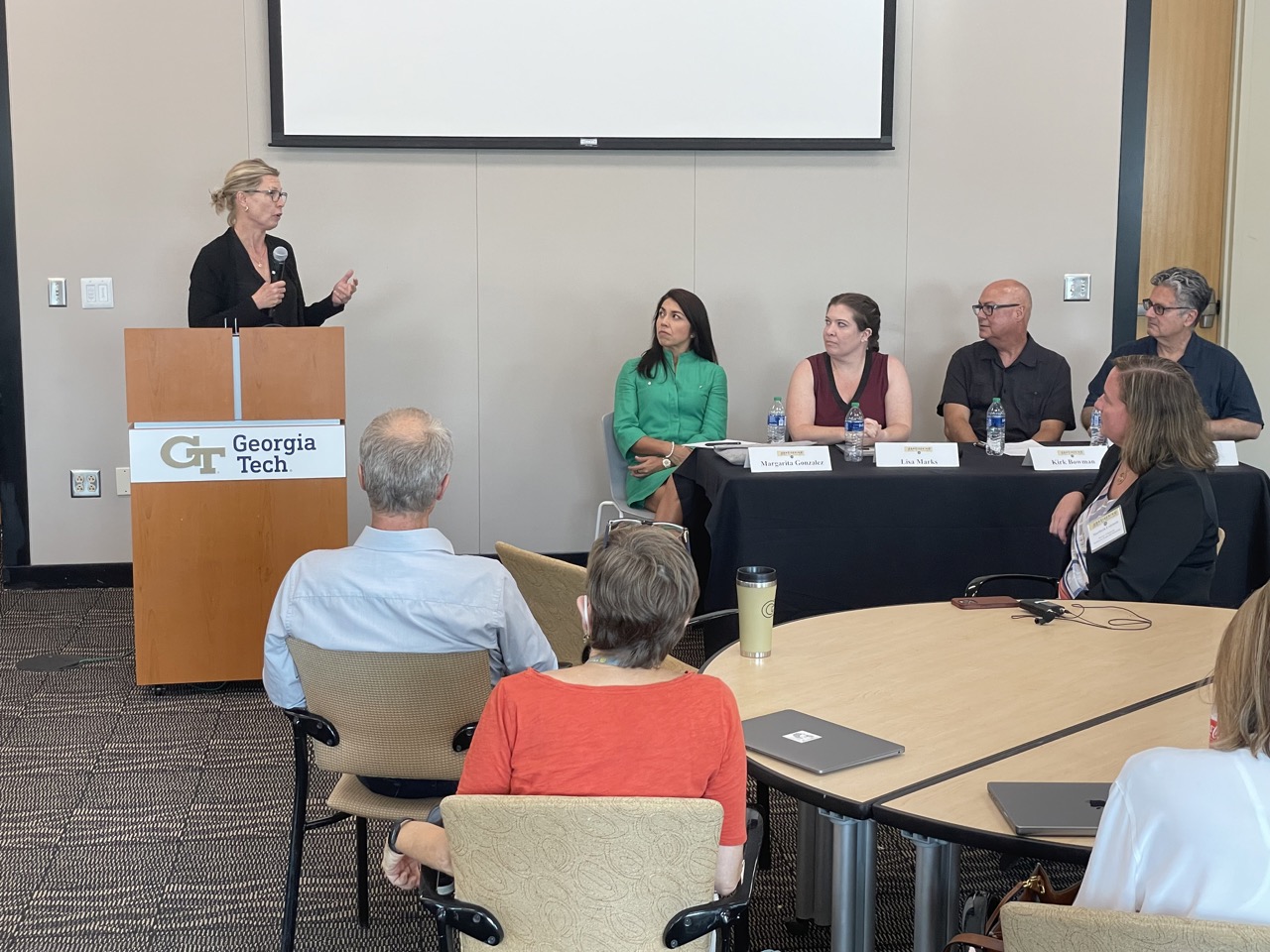
Julia Kubanek talking to some of the panelists