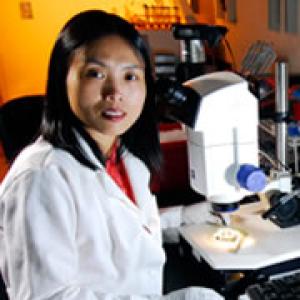
Michelle LaPlaca

Michelle LaPlaca

Michelle C. LaPlaca, Ph.D. is an Associate Professor in the Department of Biomedical Engineering, a joint department between Georgia Tech and Emory University. Dr. LaPlaca earned her undergraduate degree in Biomedical Engineering from The Catholic University of America, Washington, DC, in 1991 and her M.S.E. (1992) and Ph.D. (1996) in Bioengineering from the University of Pennsylvania, Philadelphia, PA, in the area of neuronal injury biomechanics.

Paul Benkeser

Paul Benkeser

Paul Benkeser is a professor and senior associate chair in the Wallace H. Coulter Department of Biomedical Engineering at Georgia Tech and Emory University. A member of the Georgia Tech faculty since 1985, he was one of the founding faculty of the Coulter Department in 1998 and served as its first associate chair for undergraduate studies.    

Robert Guldberg

Robert Guldberg

Robert E. Guldberg is the DeArmond Executive Director of the Phil and Penny Knight Campus for Accelerating Scientific Impact and Vice President of the University of Oregon. Guldberg’s research is focused on musculoskeletal mechanobiology, regenerative medicine, and orthopaedic medical devices. Over his 25+ year academic career, Dr. Guldberg has produced over 280 peer-reviewed publications, served as an advisor and board member for numerous biotechnology companies, and co-founded six start-ups. He was previously executive director of the Parker H.

John Peroni

John Peroni

Research in the Peroni laboratory focuses on the use of regenerative therapies ranging from cellular to blood derived products to treat musculoskeletal injuries, with a concentration on minimally invasive surgery such as laparoscopy, thoracoscopy and arthroscopy.

Steve Stice

Steve Stice

Steve Stice is Co-Founder and Chief Scientific Officer of ArunA Biomedical, Inc, where he directs the company’s clinical and research operations. He is also University of Georgia, DW Brooks Distinguished Professor and Director of the Regenerative Bioscience Center, and holds a Georgia Research Alliance Eminent Scholar endowed chair. 

Timothy Cope

Timothy Cope

My research interests center on control of movement by sensorimotor integration in the mammalian spinal cord. Using predominantly electrophysiological methods applied in vivo, we study neural signaling by spinal motoneurons, somatosensory neurons, and their central synapses. Our primary analyses include electrical properties, synaptic function, and firing behavior of single neurons. We are actively examining how these neurons and synapses respond soon and long after peripheral nerve injury and regeneration.

Young Jang

Young Jang

Dr. Jang’s lab uses multi-disciplinary approaches to study muscle stem cell biology and develops bioactive stem cell delivery vehicles for use in regenerative medicine. Dr. Jang’s lab studies both basic aspects of muscle stem cell biology, especially systemic/metabolic regulations of stem cell and stem cell niche, as well as more translational aspects of muscle stem cell and mesenchymal stem cell for use in therapeutic approaches for musculoskeletal aging, neuromuscular diseases, and traumatic injuries.

Boris Prilutsky

Boris Prilutsky

The research focus of Boris Prilutsky's laboratory is Neural Control and Biomechanics of Movement. They study how the nervous system controls hundreds of muscles and kinematic degrees of freedom of the body to produce purposeful motor behaviors and how the neural control of motor behaviors is affected by neural and musculoskeletal injuries.

Edward Balog

Edward Balog

Ryanodine receptors (RyRs) are intracellular ion channels that mediate the release of calcium from intracellular stores. RyR1 and RyR2 are the predominate isoforms in skeletal and cardiac muscle, respectively where they play a central role in excitation-contraction coupling. RyRs are the largest known ion channels and are regulated by a multitude of endogenous effectors including ions, small molecules, and accessory proteins.