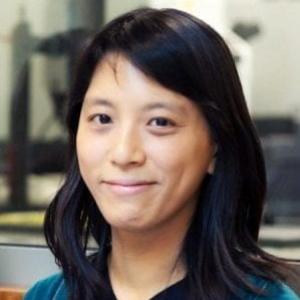
Hannah Choi

hannah

Hannah Choi is an Assistant Professor in the School of Mathematics at Georgia Tech. Her research focuses on mathematical approaches to neuroscience, with primary interests in linking structures, dynamics, and computation in data-driven brain networks at multiple scales. Before coming to Georgia Tech, she was a postdoctoral fellow at the University of Washington and also a visiting scientist at the Allen Institute for Brain Science, and spent one semester at the Simons Institute for the Theory of Computing at the University of California, Berkeley as a Patrick J McGovern Research Fellow.

Vince Calhoun


Vince Calhoun, Ph.D., is the founding director of the tri-institutional Center for Translational Research in Neuroimaging and Data Science (TReNDS) where he holds appointments at Georgia State, Georgia Tech and Emory. He is the author of more than 900 full journal articles. His work includes the development of flexible methods to analyze neuroimaging data including blind source separation, deep learning, multimodal fusion and genomics, neuroinformatics tools.

Ming-fai Fong


Ming-fai Fong is an Assistant Professor in the Coulter Department of Biomedical Engineering at Georgia Tech and Emory. She received her BS in Mechanical Engineering from MIT and Ph.D. in Neuroscience from Emory University. She completed her postdoctoral training in the Department of Brain and Cognitive Sciences at MIT and a visiting lectureship in the Neuroscience Department at Wellesley College.
 

Eberhard O. Voit

Eberhard O. Voit

Eberhard Voit’s research interests are in the area of complex biomedical systems. Work in his lab focuses on genomic, metabolic, and signaling systems with applications reaching from microbial and plant systems to human diseases. Voit has authored or co-authored about two hundred fifty scientific articles and book chapters as well as several books. Voit is an elected a fellow in the American Institute for Medical and Biological Engineering (AIMBE) and the American Association for the Advancement of Science (AAAS).

Garrett Stanley

Garrett Stanley

Garrett Stanley is the McCamish Foundation Distinguished Chair in the Department of Biomedical Engineering at Georgia Tech and Emory University and is the Co-Director of the Georgia Tech Neural Engineering Center. He has formal training, both at undergraduate and doctorate levels, in engineering (specifically trained in Control Theory through all of his graduate work), and has worked extensively in the field of neuroscience, specifically in sensory processing in the brain, and more specifically in vision and somatosensation (touch). 

C. Ross Ethier

Georgia Tech C. Ross Ethier

Prof. Ethier was originally trained as a mechanical engineer, receiving his Ph.D. from MIT in 1986 working in the lab of Roger D. Kamm. He then joined the University of Toronto, where he was a Professor of Bioengineering, Mechanical Engineering and Ophthalmology, and latterly the Director of the Institute of Biomaterials and Biomedical Engineering. Prior to joining Georgia Tech/Emory, Professor Ethier was the Head of the Department of Bioengineering at Imperial College, London from 2007-12. 

Eva Dyer

Eva Dyer

Dyer’s research interests lie at the intersection of machine learning, optimization, and neuroscience. Her lab develops computational methods for discovering principles that govern the organization and structure of the brain, as well as methods for integrating multi-modal datasets to reveal the link between neural structure and function.

Machelle Pardue

Machelle Pardue

Dr. Pardue is a Research Career Scientist at the Atlanta VA Medical Center, and a Professor in Wallace H. Coulter Department of Biomedical Engineering at Georgia Institute of Technology and Emory University School of Medicine. Dr. Pardue received her B.S. in zoology from the University of Wyoming and her doctorate in vision science and biology at the University of Waterloo. Her post-doctorate training in visual electrophysiology was completed with Dr. Neal Peachey at Loyola School of Medicine and Hines VA Hospital in Chicago and focused on biocompatibility of retinal prosthetics. Dr.

Chethan Pandarinath

Chethan Pandarinath

Our work centers on understanding how the brain represents information and intention, and using this knowledge to develop high-performance, robust, and practical assistive devices for people with disabilities and neurological disorders. We take a dynamical systems approach to characterizing the activity of large populations of neurons, combined with rigorous systems engineering (signal processing, machine learning, and real-time systems) to advance the performance of brain-machine interfaces and neuromodulatory devices.

Cassie Mitchell

Cassie Mitchell

Dr. Cassie S. Mitchell is a research engineer, elite athlete, and mentor. She is a current member of the USA Paralympic team and research faculty in the Wallace H. Coulter Department of Biomedical Engineering at Georgia Institute of Technology and Emory University. At age 18 Cassie was afflicted with Devics Neuromyelitis Optica, leaving her as a quadriplegic and with visual impairments. Her faith and philosophy on life has helped her to overcome the resulting challenges. She graduated with a B.S. in Chemical Engineering from Oklahoma State University and a Ph.D.