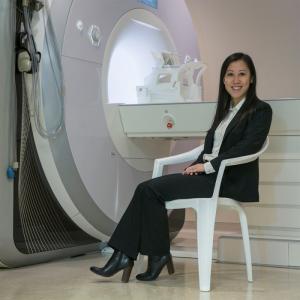
Levi Wood

Levi Wood

Dr. Wood completed his graduate training at the Massachusetts Institute of Technology. While there he worked under the guidance of Drs. H. Harry Asada and Roger Kamm to develop and use microfluidics to identify mechanisms governing vascular geometry. 

Julien Meaud

Julien Meaud

Julien Meaud joined Georgia Tech as an Assistant Professor of Mechanical Engineering in August 2013. Before joining Georgia Tech, he worked as a research fellow in the Vibrations and Acoustics Laboratory and in the Computational Mechanics Laboratory at the University of Michigan, Ann Arbor. 

Dr. Meaud investigates the mechanics and physics of complex biological systems and the mechanics and design of engineering materials using theoretical and computational tools. 

Costas Arvanitis

Costas Arvanitis

Dr. Arvanitis joined Georgia Institute of Technology as a joint Assistant Professor at the George W. Woodruff School of Mechanical Engineering and the Wallace H. Coulter Department of Biomedical Engineering in August 2016. Before joining Georgia Institute of Technology he was Instructor (Research Faculty) at Harvard Medical Scholl and Brigham and Women’s Hospital. Dr. Arvanitis has also worked as a research fellow in the Biomedical Ultrasonics, Biotherapy and Biopharmaceuticals Laboratory at the Institute of Biomedical Engineering at the University of Oxford.

Michael Borich

Michael Borich

I am a rehabilitation neuroscientist keenly interested in the brain's capacity for change in response to rehabilitation after injury or in the context of disease. My work incorporates multimodal neuroimaging and neurostimulation approaches to investigate brain structure and function. The overarching aim of this work is to uncover the key neural substrates supporting motor control and motor learning to enable the design of optimal rehabilitation strategies to maximize recovery of function following neurologic injury.

Candace Fleischer

Candace Fleischer

Candace C. Fleischer, PhD, is an Assistant Professor in the Department of Radiology and Imaging Sciences at the Emory University School of Medicine. Dr. Fleischer also holds a faculty appointment at the Wallace H. Coulter Department of Biomedical Engineering at Georgia Institute of Technology and Emory University. She serves as the director of the Biomedical Spectroscopy and Imaging Laboratory.

Nicholas Boulis

Nicholas Boulis

Dr. Nicholas M. Boulis is a neurosurgeon in Atlanta, Georgia and is affiliated with multiple hospitals in the area, including Emory University Hospital Midtown and Grady Memorial Hospital. He received his medical degree from Harvard Medical School and has been in practice for more than 20 years.

Robert Gross

Robert Gross

Dr. Gross’s research interests include: restorative approaches (including cell and gene therapy) for Parkinson's disease and other neurodegenerative disorders; physiology of movement disorders (Parkinson's disease, tremor, dystonia); novel surgical techniques for epilepsy (e.g. deep brain stimulation, cell and gene therapy). In particular, he has been elucidating the role of axon guidance molecules in the development and reconstruction of the nigrostriatal pathway, which degenerates in P.D.

Gary J. Bassell

Gary Bassell

Gary J. Bassell, Ph.D. joined the faculty at Emory University School of Medicine in 2005, where he is currently Professor and Chair of the Department of Cell Biology. His personal lab’s main interest is in understanding the mechanisms and functions of mRNA transport and local protein synthesis in neurons of the central and peripheral nervous system. The lab utilizes in vitro and in vivo mouse models and induced pluripotent stem cells (iPSCs) to study the basic mechanism, regulation and function of mRNA localization and local translation in axonal growth cones and dendritic spines.

W. Hong Yeo

W. Hong Yeo

W. Hong Yeo is a TEDx alumnus and biomechanical engineer. Since 2017, Yeo is an assistant professor of the George W. Woodruff School of Mechanical Engineering and Program Faculty in Bioengineering at the Georgia Institute of Technology. Before joining Georgia Tech, he has worked at Virginia Commonwealth University Medicine and Engineering as an assistant professor from 2014-2016. Yeo received his BS in mechanical engineering from INHA University, South Korea in 2003 and he received his Ph.D. in mechanical engineering and genome sciences at the University of Washington, Seattle in 2011.

Minoru Shinohara


Physiological and biomechanical mechanisms underlying fine motor skills and their adjustments and adaptations to heightened sympathetic nerve activity, aging or inactivity, space flight or microgravity, neuromuscular fatigue, divided attention, and practice in humans. He uses state-of-the-art techniques in neuroscience, physiology, and biomechanics (e.g., TMS, EEG, fMRI, single motor unit recordings, microneurography, mechanomyography, ultrasound elastography, and exoskeleton robot) in identifying these mechanisms.