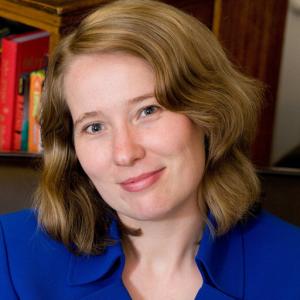
Thomas Orlando

Thomas Orlando

Our group is primarily a surface chemistry and physics group which focuses on the use of high-powered pulsed lasers, low-energy electron scattering, micro-plasmas, mass spectrometry and ultrahigh vacuum surface science techniques. We use this "tool-set" as well as some scattering theory to unravel the details of non-thermal processes occurring under a variety of non-equilibrium conditions.

Wilbur Lam

Wilbur Lam

Dr. Wilbur Lam received his B.A. from Rice University in 1995, his M.D. from the Baylor College of Medicine in 1999 and his Ph.D. from the University of California,San Francisco/University of California, Berkeley Joint Graduate Group in Bioengineering in 2008. He completed his Residency in Pediatrics from UCSF in 2002 and was a Postdoctoral Fellow at UC Berkeley from 2008-2010. Dr. Lam's research involves integrating microtechnology ,development, experimental hematology and oncology and clinical medicine.

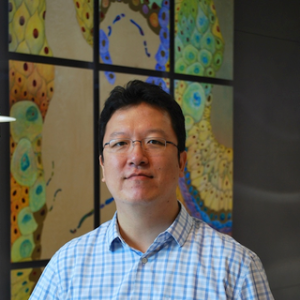
David Ku

David Ku

Selected recent publications:

➤ Robert G. Mannino, Eric J. Nehl, Sarah Farmer, Amanda Foster Peagler, Maren C. Parsell, Viviana Claveria, David Ku, David S. Gottfried, Hang Chen, Wilbur A. Lam, and Oliver Brand, “The critical role of engineering in the rapid development of COVID-19 diagnostics: Lessons from the RADx Tech Test Verification Core” Science Advances. 9, eade4962 (2023). https://www.science.org/doi/10.1126/sciadv.ade4962

YongTae (Tony) Kim

YongTae (Tony) Kim

Kim joined the Woodruff School of Mechanical Engineering as an Assistant Professor in July 2013. Prior to his current appointment, he was a Postdoctoral Associate in the David H. Koch Institute for Integrative Cancer Research at MIT, where he developed biomimetic microsystems for probing nanoparticle behaviors in the inflamed endothelium and for synthesizing therapeutic and diagnostic nanomaterials. His doctorate research at CMU focused on closed-loop microfluidic control systems for lab-on-a-chip applications to biochemistry and developmental biology.

Seung Soon Jang

Seung Soon Jang

Seung Soon Jang joined the School of Materials Science and Engineering at the Georgia Institute of Technology in July 2007. Jang worked at Samsung Electronics and the Materials and Process Simulation Center (MSC) at CalTech performing various researches in nanoelectronics, fuel cell, and interfacial systems as a director of Supramolecular Technology for six years.

Karl Jacob

Karl Jacob

Karl I. Jacob, a professor of Materials Science and Engineering with a joint appointment in the G. W. Woodruff School of Mechanical Engineering, teaches graduate and undergraduate courses on polymer physics and engineering, rheology, and mechanics of polymeric materials. His graduate work was in the area of numerical analysis of vibrating three-dimensional structures. He came to Georgia Tech from DuPont Corporation in 1995.

David Hu

David Hu

David Hu is a fluid dynamicist with expertise in the mechanics of interfaces between fluids such as air and water. He is a leading researcher in the biomechanics of animal locomotion. The study of flying, swimming and running dates back hundreds of years, and has since been shown to be an enduring and rich subject, linking areas as diverse as mechanical engineering, mathematics and neuroscience. Hu's work in this area has the potential to impact robotics research.

Daniel Goldman

Dan Goldman

My research integrates my work in complex fluids and granular media and the biomechanics of locomotion of organisms and robots to address problems in nonequilibrium systems that involve interaction of matter with complex media. For example, how do organisms like lizards, crabs, and cockroaches cope with locomotion on complex terrestrial substrates (e.g. sand, bark, leaves, and grass).

Craig Forest

Craig Forest

Craig Forest is a Professor and Woodruff Faculty Fellow in the George W. Woodruff School of Mechanical Engineering at Georgia Tech where he also holds program faculty positions in Bioengineering and Biomedical Engineering. He conducts research on miniaturized, high-throughput robotic instrumentation to advance neuroscience and genetic science, working at the intersection of bioMEMS, precision machine design, optics, and microfabrication. Prior to Georgia Tech, he was a research fellow in Genetics at Harvard Medical School. He obtained a Ph.D.

Jennifer Curtis

Jennifer Curtis

The Curtis lab is primarily focused on the physics of cell-cell and cell-extracellular matrix interactions, in particular within the context of glycobiology and immunobiology. Our newest projects focus on questions of collective and single cell migration in vitro and in vivo; immunophage therapy "an immunoengineering approach - that uses combined defense of immune cells plus viruses (phage) to overcome bacterial infections"; and the study of the molecular biophysics and biomaterials applications of the incredible enzyme, hyaluronan synthase.