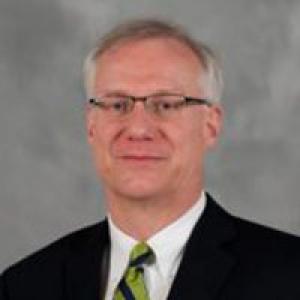
Nicholas V. Hud

Nicholas V. Hud

Nicholas Hud was born and raised in Los Angeles, California. He received his B.S. degree in physics from Loyola Marymount University. His Ph.D. was conferred by the University of California, Davis for physical investigations of DNA condensation by protamine. From 1992-1995 he was a postdoctoral fellow in the biology and biotechnology research program at Lawrence Livermore National Laboratory with Rod Balhorn. From 1995-1998 he was an NIH postdoctoral fellow in the Molecular Biology Institute at UCLA where he worked with Juli Feigon and Frank A. L.

Facundo Fernandez

Facundo Fernandez

Facundo was born in Buenos Aires, Argentina. He received his MSc in Chemistry from the College of Exact and Natural Sciences, Buenos Aires University in 1995 and his PhD in Analytical Chemistry from the same University, in 1999.  In August 2000, he joined the research group of Prof. Richard N. Zare in the Department of Chemistry at Stanford University.  His work focused on several aspects of Hadamard transform time-of-flight mass spectrometry with an emphasis on coupling this technique to capillary-format separation methods.

Loren Williams

Loren Williams

  • Loren Williams is from Seattle. He received his B.Sc. in Chemistry from the University of Washington, where he worked in the laboratory of Martin Gouterman. He received his Ph.D. in Physical Chemistry from Duke University, where he worked the laboratory of Barbara Shaw. He was an American Cancer Society Postdoctoral Fellow at Harvard, and an NIH Postdoctoral Fellow at MIT with Alexander Rich. He is currently a Professor in the School of Chemistry and Biochemistry at Georgia Tech. Loren is a Fellow of the AAAS and of the International Society for the Study of the Origins of Life.

Adegboyega “Yomi” Oyelere

Adegboyega “Yomi” Oyelere

Dr. Adegboyega “Yomi” Oyelere has received PhD from Brown University in 1998. Currently, he works as an associate professor in the School of Chemistry and Biochemistry at the Georgia Institute of Technology.

David Lynn

David Lynn

David G. Lynn has contributed in the general areas of molecular recognition, synthetic biology and chemical evolution, and has developed chemical and physical methods for the analysis of supramolecular self-assemblies, of signal transduction in cellular development and pathogenesis, of molecular skeletons for storing and reading information, and of the evolution of biological order.

Martha Grover

Martha Grover

Grover’s research activities in process systems engineering focus on understanding macromolecular organization and the emergence of biological function. Discrete atoms and molecules interact to form macromolecules and even larger mesoscale assemblies, ultimately yielding macroscopic structures and properties. A quantitative relationship between the nanoscale discrete interactions and the macroscale properties is required to design, optimize, and control such systems; yet in many applications, predictive models do not exist or are computationally intractable.

Jennifer Glass

Jennifer Glass

The Glass research group studies the microbes that made Earth habitable, and, more specifically, the microbial mechanisms underpinning cryptic transformations of methane and nitrous oxide in oxygen-free ecosystems. Why focus on the microbial world? The Earth has been constantly inhabited for four billion years. For three-quarters of that time, life was solely microbial. Ancient microbes produced the gases that warmed the planet to clement temperatures when the sun was faint, and that invented the molecular machines that drive biogeochemical cycles.

Sam Brown

Sam Brown

Sam Brown's lab studies the multi-scale dynamics of infectious disease. Their goal is to improve the treatment and control of infectious diseases through a multi-scale understanding of microbial interactions. Their approach is highly interdisciplinary, combining theory and experiment, evolution, ecology and molecular microbiology in order to understand and control the multi-scale dynamics of bacteria pathogens.

Andreas Bommarius

Andreas Bommarius

Andreas (Andy) S. Bommarius is a professor of Chemical and Biomolecular Engineering as well of Chemistry and Biochemistry at the Georgia Institute of Technology in Atlanta, GA.  He received his diploma in Chemistry in 1984 at the Technical University of Munich, Germany and his Chemical Engineering B.S. and Ph.D. degrees in 1982 and 1989 at MIT, Cambridge, MA.