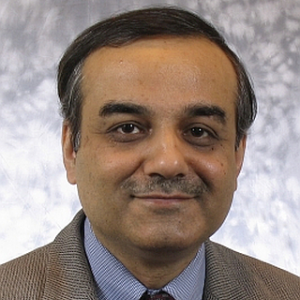
Benjamin Kein

Benjamin Kein

Benjamin Klein received his B.S. and M.S. in Electrical Engineering from the University of Wisconsin-Madison in 1994 and 1995, respectively. He received his Ph.D. in Electrical Engineering from the University of Illinois – Urbana-Champaign in 2000. The subject of his doctoral dissertation was the theory and modeling of vertical-cavity surface-emitting lasers (VCSELs), which are a class of semiconductor laser used for telecommunications applications.

Jennifer Hasler

Jennifer Hasler

Jennifer Hasler received her B.S.E. and M.S. degrees in electrical engineering from Arizona State University in August 1991. She received her Ph.D. in computation and neural systems from California Institute of Technology in February 1997. Hasler is a professor at the Georgia Institute of Technology in the School of Electrical and Computer Engineering; Atlanta is the coldest climate in which Hasler has lived. Hasler founded the Integrated Computational Electronics (ICE) laboratory at Georgia Tech, a laboratory affiliated with the Laboratories for Neural Engineering.

John D. Cressler

John Cressler

Cressler grew up in Georgia, and received the B.S. degree in physics from Georgia Tech in 1984. From 1984 until 1992 he was on the research staff at the IBM Thomas J. Watson Research Center in Yorktown Heights, NY, working on high-speed Silicon and Silicon-Germanium (SiGe) microelectronic devices and technology.

Abhijit Chatterjee

Abhijit Chatterjee

Abhijit Chatterjee is a professor in the School of Electrical and Computer Engineering at Georgia Tech and a Fellow of the IEEE. He received his Ph.D in electrical and computer engineering from the University of Illinois at Urbana-Champaign in 1990. Chatterjee received the NSF Research Initiation Award in 1993 and the NSF CAREER Award in 1995. He has received six Best Paper Awards and three Best Paper Award nominations. His work on self-healing chips was featured as one of General Electric 's key technical achievements in 1992 and was cited by the Wall Street Journal.

Billyde Brown

Billyde Brown

Billyde Brown is a Senior Research Faculty and Education and Workforce Development (EWD) Director at the Georgia Tech Manufacturing Institute (GTMI), one of eleven interdisciplinary research institutes at the Georgia Institute of Technology. Dr. Brown also serves as a Manufacturing Advisor at the Georgia MBDA (Minority Business Development Agency) Business Center where he connects minority-owned business clients with resources and expertise at Georgia Tech and provides assistance with prototyping and engineering services.

Muhannad S. Bakir

Muhannad S. Bakir

Muhannad S. Bakir is the Dan Fielder Professor in the School of Electrical and Computer Engineering at Georgia Tech. He and his research group have received more than thirty paper and presentation awards including six from the IEEE Electronic Components and Technology Conference (ECTC), four from the IEEE International Interconnect Technology Conference (IITC), and one from the IEEE Custom Integrated Circuits Conference (CICC). Bakir’s group was awarded 2014 and 2017 Best Papers of the IEEE Transactions on Components Packaging and Manufacturing Technology (TCPMT).

Jonathan Colton

Jonathan Colton

Colton's research interests are in the areas of design and manufacturing, focusing on polymers and polymer composites. Processing techniques, such as micro-molding, injection molding, filament winding, resin transfer molding and the like, are studied and used to fabricate these devices and products, such as smart composite structures.

A. Fatih Sarioglu

A. Fatih Sarioglu

A. Fatih Sarioglu received the B.Sc. degree from Bilkent University, Ankara, Turkey in 2003, and the M.S. and Ph.D. degrees from Stanford University in 2005 and 2010, respectively, all in Electrical Engineering.

F. Levent Degertekin

F. Levent Degertekin

Dr. F. Levent Degertekin received his B.S. degree in 1989 from M.E.T.U, Turkey; M.S. degree in 1991 from Bilkent University, Turkey; and his Ph.D. in 1997 from Stanford University, California, all in electrical engineering. His M.S. thesis was on acoustic microscopy, and his Ph.D. work was on ultrasonic sensors for semiconductor processing, and wave propagation in layered media. He worked as an engineering research associate at the Ginzton Laboratory at Stanford University from 1997 until joining the George W.

W. Hong Yeo

W. Hong Yeo

W. Hong Yeo is a TEDx alumnus and biomechanical engineer. Since 2017, Yeo is an assistant professor of the George W. Woodruff School of Mechanical Engineering and Program Faculty in Bioengineering at the Georgia Institute of Technology. Before joining Georgia Tech, he has worked at Virginia Commonwealth University Medicine and Engineering as an assistant professor from 2014-2016. Yeo received his BS in mechanical engineering from INHA University, South Korea in 2003 and he received his Ph.D. in mechanical engineering and genome sciences at the University of Washington, Seattle in 2011.