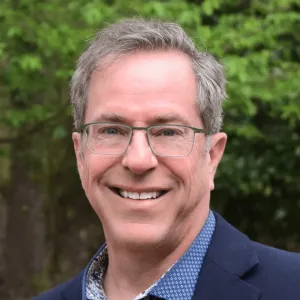
Pan Li

Assistant Professor ECE, Pan Li

Pan Li joined Georgia Tech in 2023 Spring. Before that, Pan Li worked at the Purdue Computer Science Department as an assistant professor from the 2020 fall to the 2023 Spring. Before joining Purdue, Pan worked as a postdoc at Stanford Computer Science Department from 2019 to 2020. Pan did his Ph.D. in Electrical and Computer Engineering at the University of Illinois Urbana-Champaign. Pan Li has got the NSF CAREER award, the Best Paper award from the Learning on Graph Conference, Sony Faculty Innovation Award, JPMorgan Faculty Award.

Bo Dai

Assistant Professor Bo Dai

Bo Dai is a tenure-track assistant professor at Georgia Tech's School of Computational Science and Engineering. Prior to joining academia, he worked as a Staff Research Scientist at Google Brain. Bo Dai completed his Ph.D. in the School of Computational Science and Engineering at Georgia Tech, where he worked from 2013 to 2018 with Professor Le Song. His research focuses on developing principled and practical machine learning techniques for real-world applications. Bo Dai has received numerous awards for his work, including the best paper award at AISTATS 2016.

Nabil Imam

Assistant Professor Nabil Imam

Nabil Imam works on topics in machine learning and theoretical neuroscience with the goal of understanding general principles of neural coding and computation, and their technological applications.

Prof. Imam joined Georgia Tech faculty in January 2022.

Lynn Kamerlin

Lynn Kamerlin

Lynn Kamerlin received her Master of Natural Sciences from the University of Birmingham (UK), in 2002, where she remained to complete a PhD in Theoretical Organic Chemistry under the supervision

Mijin Kim

Mijin Kim

Mijin Kim is an assistant professor in the School of Chemistry and Biochemistry at Georgia Tech.

Peter Kasson

Peter Kasson

Peter Kasson is an international leader in the study of biological membrane structure, dynamics, and fusion, with particular application to how viruses gain entry to cells. His group performs both high-level experimental and computational work – a powerful combination that is critical to advancing our understanding of this important problem. His publications describe inventive approaches to the measurement of viral fusion rates and characterization of fusion mechanisms, and to the modeling of large-scale biomolecular and lipid assemblies.

Wei Xu

Wei Xu - assistant professor in the School of Interactive Computing at the Georgia Institute of Technology.

Wei Xu is an associate professor in the School of Interactive Computing at the Georgia Institute of Technology. Xu received her Ph.D. in Computer Science from New York University, and her B.S. and M.S. from Tsinghua University. Her research interests are in natural language processing, machine learning, and social media. Her recent work focuses on text generation, stylistics, information extraction, robustness and controllability of machine learning models, and reading and writing assistive technology.

Lu Gan

Lu Gan headshot

Lu Gan joined the Daniel Guggenheim School of Aerospace Engineering at the Georgia Institute of Technology as an Assistant Professor in January 2024. She leads the Lu's Navigation and Autonomous Robotics (Lunar) Lab at Georgia Tech, and is on the core faculty of the Institute for Robotics and Intelligent Machines. Her research interests include robot perception, robot learning, and autonomous navigation.

Larry Heck

Larry Paul Heck, Professor Georgia Tech

Larry P. Heck is a Professor with a joint appointment in the Schools of Electrical and Computer Engineering and Interactive Computing at the Georgia Institute of Technology. He holds the Rhesa S. Farmer Distinguished Chair of Advanced Computing Concepts and is a Georgia Research Alliance Eminent Scholar. His received the BSEE from Texas Tech University (1986), and MSEE and PhD EE from the Georgia Institute of Technology (1989,1991).

Taka Ito

Taka Ito

Our goal is to contribute to the fundamental understanding of the Earth's biogeochemical cycling in the present and past climate, to conduct research in Ecosystem and Biogeochemistry, Ocean Carbon Cycle, Global Climate Change, and Ocean Deoxygenation using computational modeling, observations and AI/machine learning approaches.