
Andrew Medford

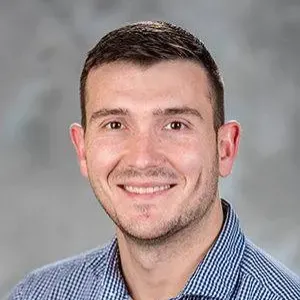
Andrew Medford

Dr. Medford is interested in leveraging materials informatics, statistics, and machine learning to maximize the practical impact of fundamental atomic-scale simulations in the field of surface science and catalysis. His research areas include heterogeneous catalysis, oxide surface chemistry, density functional theory, kinetic models, uncertainty quantification, and Bayesian optimization and inference.

David S. Sholl

David S. Sholl

Sholl’s research focuses on materials whose macroscopic dynamic and thermodynamic properties are strongly influenced by their atomic-scale structure. Much of this research involves applying computational techniques such as molecular dynamics, Monte Carlo simulations and quantum chemistry methods to materials of interest. Although the group's work is centered on computational methods, it involves extensive collaboration with experimental groups and industrial partners.

Carsten Sievers

Carsten Sievers

Sievers’ research interests are in heterogeneous catalysis, reactor design, applied spectroscopy, and characterization and synthesis of solid materials. Combining these interests he seeks to develop processes for the production of fuels and chemicals. His research program combines fundamental and applied research.

Matthew Realff

Matthew Realff

Dr. Realff’s broad research interests are in the areas of process design, simulation, and scheduling. His current research is focused on the design and operation of processes that minimize waste production by recovery of useful products from waste streams, and the design of processes based on biomass inputs. In particular, he is interested in carbon capture processes both from flue gas and dilute capture from air as well as the analysis and design of processes that use biomass.

Ryan Lively

Ryan Lively

Ryan Lively was born in 1984. He spent approximately 16 years in Gainesville, FL and attended almost every home football game at The Swamp. He enrolled at Georgia Tech in 2002 as an eager Chemical Engineering student and has been a Yellow Jacket at heart ever since. During his studies at Georgia Tech, Ryan worked on research projects as diverse as ab initio quantum mechanical methods to estimate molecular binding energies, fresh Georgia peach preservation, composite spinneret design, dual-layer hollow fiber membrane spinning, and sorbent-loaded fiber spinning.