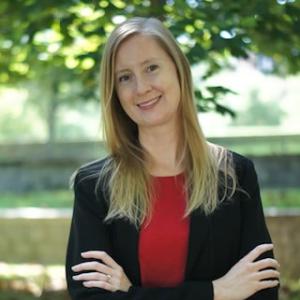
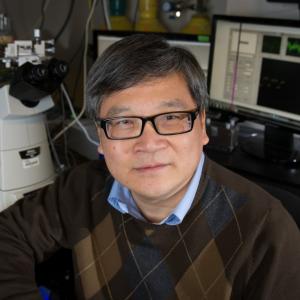
A. Fatih Sarioglu

A. Fatih Sarioglu

A. Fatih Sarioglu received the B.Sc. degree from Bilkent University, Ankara, Turkey in 2003, and the M.S. and Ph.D. degrees from Stanford University in 2005 and 2010, respectively, all in Electrical Engineering.

Pamela Bhatti

Pamela Bhatti

Dr. Pamela Bhatti is Professor and Associate Chair for Strategic Initiatives and Innovation at the School of Electrical and Computer Engineering, Georgia Tech. Her research is dedicated to overcoming sensory loss in human hearing through focused neural stimulation, and novel implantable sensors. Dr. Bhatti also conducts research in cardiac imaging to assess and monitor cardiovascular disease. She received her B.S. in Bioengineering from the University of California, Berkeley (1989), her M.S. in Electrical Engineering from the University of Washington (1993), and her Ph.D.

Amit Reddi


Metalloproteins constitute one of the largest classes

Ronghu Wu

Ronghu Wu

Research in the Wu lab is mainly focused on mass spectrometry (MS)-based proteomics. They are developing innovative methods to globally identify and quantify proteins and their post-translational modifications (PTMs), including glycosylation and phosphorylation, and applying them for biomedical research. Protein PTMs plays essential roles in biological systems, and aberrant protein expression and modification are directly related to various human diseases, including cystic fibrosis, cancer and infectious diseases.

Facundo Fernandez

Facundo Fernandez

Facundo was born in Buenos Aires, Argentina. He received his MSc in Chemistry from the College of Exact and Natural Sciences, Buenos Aires University in 1995 and his PhD in Analytical Chemistry from the same University, in 1999.  In August 2000, he joined the research group of Prof. Richard N. Zare in the Department of Chemistry at Stanford University.  His work focused on several aspects of Hadamard transform time-of-flight mass spectrometry with an emphasis on coupling this technique to capillary-format separation methods.

Adegboyega “Yomi” Oyelere

Adegboyega “Yomi” Oyelere

Dr. Adegboyega “Yomi” Oyelere has received PhD from Brown University in 1998. Currently, he works as an associate professor in the School of Chemistry and Biochemistry at the Georgia Institute of Technology.

Susan Thomas

 Susan Thomas

Susan Napier Thomas holds the Woodruff Professorship and is a Professor (full) with tenure of Mechanical Engineering in the Parker H. Petit Institute of Bioengineering and Bioscience at the Georgia Institute of Technology where she holds adjunct appointments in Biomedical Engineering and Biological Science and is a member of the Winship Cancer Institute of Emory University. Prior to this appointment, she was a Whitaker postdoctoral scholar at École Polytechnique Fédérale de Lausanne (one of the Swiss Federal Institutes of Technology) and received her B.S.

Christopher Porter

Christopher Porter

The goal of Christopher Porter's lab is to develop novel therapeutic strategies for leukemia through better understanding of molecular mechanisms of leukemogenesis and treatment resistance. We employ a wide variety of techniques, in vitro and in vivo, for discovery and validation of molecular vulnerabilities in cancer cells. For example, using a genome-scale shRNA screen, we identified WEE1 as a chemosensitizing target in acute myeloid leukemia (AML) cells.

Khalid Salaita

Khalid Salaita

Khalid Salaita is the Samuel Candler Dobbs Professor of Chemistry, and Director for Graduate Studies in the Chemistry Department at Emory University in Atlanta, Georgia (USA). Khalid grew up in Jordan and moved to the US in 1997 to pursue his undergraduate studies at Old Dominion University in Norfolk, Virginia (USA). He worked under the mentorship of Prof. Nancy Xu studying the spectroscopic properties of plasmonic nanoparticles. He then obtained his Ph.D. with Prof. Chad Mirkin at Northwestern University (Evanston, IL) in 2006. 

Cheng Zhu

Cheng Zhu

Our interests lie in the adhesion and signaling molecules of the immune system as well as those involved in platelet adhesion and aggregation. We are primarily focused on early cell surface interaction kinetics and their primary signaling responses, as these are critical in determining how a cell will ultimately respond upon contact with another cell.