Jeffery Hsieh
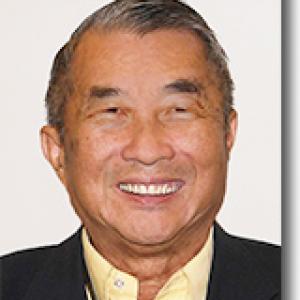


The Gutekunst Lab is interested in pushing the limits of complexity in macromolecular systems using innovative concepts from synthetic organic chemistry.

Sholl’s research focuses on materials whose macroscopic dynamic and thermodynamic properties are strongly influenced by their atomic-scale structure. Much of this research involves applying computational techniques such as molecular dynamics, Monte Carlo simulations and quantum chemistry methods to materials of interest. Although the group's work is centered on computational methods, it involves extensive collaboration with experimental groups and industrial partners.

Jung Choi is an associate professor in the School of Biology at Georgia Tech and director of the Professional Masters program in Bioinformatics. He has been at Georgia Tech since 1986. Choi has done research on plant protein kinases with calmodulin-like domains, and some research with yeast lipid metabolism that has yet to bear fruit. He has taught a wide variety of courses, but most enjoys teaching large intro lecture courses – which he finds both challenging and rewarding.

Shuming Nie is the Wallace H. Coulter Distinguished Chair Professor in Biomedical Engineering at Emory University and the Georgia Institute of Technology, with joint appointments in chemistry, materials science and engineering, and hematology and oncology. He is the Principal Investigator and Director of the Emory-Georgia Tech Nanotechnology Center for Personalized and Predictive Oncology, one of the eight national centers funded by the National Cancer Institute (NIH/NCI).

Rudolph (Rudy) L. Gleason began at Tech in Fall 2005 as an assistant professor. Prior, he was a postdoctoral fellow at Texas A&M University. He is currently a professor in the School of Mechanical Engineering and the School of Biomedical Engineering in the College of Engineering. Gleason’s research program has two key and distinct research aims. The first research aim is to quantify the link between biomechanics, mechanobiology, and tissue growth and remodeling in diseases of the vasculature and other soft tissues.
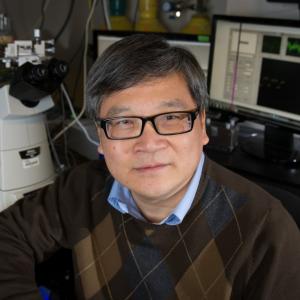
Our interests lie in the adhesion and signaling molecules of the immune system as well as those involved in platelet adhesion and aggregation. We are primarily focused on early cell surface interaction kinetics and their primary signaling responses, as these are critical in determining how a cell will ultimately respond upon contact with another cell.

Donggang Yao is a professor in the School of Materials Science and Engineering at Georgia Institute of Technology. He received his Ph.D. and Master’s degrees both from University of Massachusetts Amherst, and his B.S. degree from Shanghai Jiao Tong University, China. He teaches and directs research in the broad area of polymer engineering. His current research focuses on polymer micromolding, fiber spinning, single-polymer composites, constitutive modeling, and process modeling and simulation. He has published over 60 journal papers and 80 conference papers on polymer processing.

