Research Town Hall - Feb. 27, 2025

The Georgia Tech research community is invited to the virtual Research Town Hall hosted by interim EVPR Tim Lieuwen on Thursday, February 27, 2025 at 11 a.m.

Agenda includes a discussion led by Tim Lieuwen and Tanta Myles on how to conduct research collaboratively and securely given the continual shifts in the regulatory landscape for research.

There will be time for Q&A as well. 

Zoom link: https://gatech.zoom.us/j/97247122372

Challenging Erasure: Collaborative Architectural Documentation and Historic Interpretation


Speaker: Danielle S. Willkens, Associate Professor, School of Architecture, Georgia Institute of Technology

Abstract: How can we study and reveal the hidden, or repressed, histories within the built environment that illuminate a more complete and accurate record of our shared history? This talk will feature ongoing documentation, visualization, and historic interpretation work at modern civil rights sites in the southern U.S., and how expanded narratives can pave the way for a more resilient and inclusive future.

Tackling Global AI Hiring Bias: Prioritizing Collaboration Over Division Between the US, EU, and China

Tackling Global AI Hiring Bias

Kathryn Conrad / Better Images of AI / Datafication / CC-BY 4.0

While AI-driven systems hold the potential to streamline hiring processes, the issue of hiring discrimination has emerged as a pressing global concern as AI-automated recruitment tools gain widespread adoption. For instance, in August 2023, the US Equal Employment Opportunity Commission (EEOC) reached a landmark settlement with iTutorGroup, a Chinese education technology company, marking the first US case to address AI-driven hiring bias with a foreign company. iTutorGroup was accused of rejecting over 200 candidates solely based on age, a protected status in the US, highlighting the serious ethical risks that AI-driven hiring processes can pose.

As automated tools for job posting, resume screening, and video interviews become more prevalent worldwide, they increasingly influence employment opportunities, often affecting marginalized groups such as women, ethnic minorities, and individuals with disabilities. Addressing bias in these systems demands a collaborative, cross-border effort to design and deploy ethical frameworks, regulatory priorities, and technological innovations to establish a global standard.

This research was conducted by Huaigu Li, Ph.D. student in computer science at the Georgia Institute of Technology, and Michael L. Best, professor at the Sam Nunn School of International Affairs and the School of Interactive Computing at the Georgia Institute of Technology.

Read the full article in Tech Policy Press (Jan 31, 2025) >>

 
News Contact

Walter Rich

Celebrate STEAM | Atlanta Science Festival Launch at Georgia Tech

Members of the Georgia Tech community are excited to welcome the community back to campus for the kickoff event of the 12th annual Atlanta Science Festival. Formerly known as Georgia Tech Science and Engineering Day, Celebrate STEAM will feature hands on activities for participants of all ages. Whether your interests lie in robotics, brains, biology, space, art, nanotechnology, paper, computer science, wearables, bioengineering, chemical engineering, or systems engineering, we have something for everyone.

Adaptive User Interfaces for Personalized Services


Speaker: Pat Langley, principal research scientist in the Information
and Communications Laboratory at Georgia Tech Research Institute
and director of the Institute for the Study of Learning and Expertise

Building Toward Community-Owned Resilience Hubs

Participants outside of the Frissell Community House at the Penn Center on November 21, 2024

Participants outside of the Frissell Community House at the Penn Center on November 21, 2024. Photo credit - Jennifer Hirsch.

Resilience hubs are trusted, community-serving facilities designed to support residents and coordinate communication and resources in everyday life; and before, during, and after disruptions. Environmental disruptions such as hurricane damage, coastal erosion, flood damage, extreme heat, and wildfire destruction are occurring more frequently and with greater economic costs. 

On November 21, 2024, a team from Georgia Tech met with nine other organizations at the Penn Center on St. Helena Island in South Carolina to work towards developing targeted resilience strategies to cope with environmental disaster events. More specifically, the Penn Center workshop’s overall goal was the co-creation of paths toward building community-led and -engaged, scientifically supported resilience hubs, addressing the unique challenges faced by coastal and inland vulnerable communities in the Southeastern United States.

A common definition of community resilience is “the sustained ability of a community to use available resources to respond to, withstand, and recover from adverse situations.”

Part of the process to build these action research partnerships and resilience plans is to bring together community leaders, government representatives, and an interdisciplinary team of researchers—many of whom are from Georgia Tech. Georgia Tech researchers bring expertise from science, engineering, design, humanities, and social sciences.

As part of the workshop, 15 Georgia Tech architecture students presented their design models for a multipurpose 20,000 square-foot building designed for the Penn Center campus which is steeped in African American history.

Some of the researchers at Georgia Tech attending the workshop and supporting the development of Southeastern community-focused resilience strategies included: 

  • Sofía Pérez-Guzmán, assistant professor in the School of Civil & Environmental Engineering; 
  • Allen Hyde, associate professor in the School of History and Sociology, and faculty member of the Institute for People and Technology; 
  • Danielle Willkens, associate professor in the School of Architecture and faculty member of the Institute for People and Technology; 
  • Alexander Robel, associate professor in the School of Earth and Atmospheric Sciences; 
  • Jennifer Hirsch, director of the Center for Sustainable Communities Research and Education at Georgia Tech;  
  • Valerie M. Thomas, Anderson-Interface Chair of Natural Systems and professor in the H. Milton School of Industrial and Systems Engineering with a joint appointment in the School of Public Policy; 
  • Joe F. Bozeman III, assistant professor in the School of Civil and Environmental Engineering with a joint appointment in the School of Public Policy; 
  • Russell Clark, lead principal investigator of the Coastal Equity and Resilience Hub and senior research scientist at the Institute for People and Technology; 
  • Nicole Kennard, assistant director for community-engaged research in the Brook Byers Institute for Sustainable Systems; and 
  • Jung-Ho Lewe, senior research engineer in the Daniel Guggenheim School of Aerospace Engineering.


Participating partner organizations in addition to the Penn Center include:

  • 7 Dimensions Outreach
  • Atlanta Preservation Center
  • Center for Sustainable Communities 
  • Coastal Conservation League 
  • Community Church Atlanta
  • Furman University
  • Gullah Geechee Futures Project
  • University of South Carolina: Arnold School of Public Health, the EJ Strong Program, and the Department of Environmental Health Science
  • Willson Center for Humanities and Arts at the University of Georgia


This work is supported by a Georgia Tech Sustainability Next research seed grant. The seed grant program is administered by the Brook Byers Institute for Sustainable Systems (BBIS) in collaboration with the Renewable Bioproducts Institute (RBI), the Strategic Energy Institute (SEI), and the Institute for People and Technology (IPaT). The program nurtures promising areas for future large-scale collaborative sustainability research, research translation, and high-impact outreach; provides mid-career faculty with leadership and community-building opportunities; and broadens and strengthens the Georgia Tech sustainability community as a whole.

 
News Contact

Walter Rich

ACM Recognizes Faculty Trio for Their Transformative Computing Contributions

Klaus Advanded Computing Building rainbow steps

Three Georgia Tech faculty members are being recognized as 2024 ACM Fellows for significant contributions to computing.

College of Computing Professors Michael Bailey, Dana Randall, and Thad Starner are among 55 Fellows named today by ACM, the Association for Computing Machinery, for their “transformative contributions to computing science and technology.”

"Computing technology has had a tremendous impact in shaping how we live and work today,” said ACM President Yannis Ioannidis. “The ACM Fellows program honors the creativity and hard work of ACM members whose specific accomplishments drive innovation and make broader advances possible.”

According to its news release, ACM is recognizing Bailey, founding chair of the School of Cybersecurity and Privacy, for his “contributions to cybersecurity and internet measurement.” Bailey has authored more than 90 papers on the performance and security of complex distributed systems.

Randall is a professor with joint appointments in the School of Computer Science and the School of Mathematics. The ACM fellowship acknowledges her “contributions to the theory of Markov chains and programmable active matter.” Her research in randomized algorithms and stochastic processes connects computer science, discrete mathematics, and statistical physics.

A professor in the School of Interactive Computing, Starner is being honored as an ACM Fellow for “contributions to and leadership in the wearable computing research community.” His research combines wearable and ubiquitous computing technologies with AI, pattern recognition, and human-computer interaction. 

Starner, Randall, and Bailey are longstanding ACM members. The 2024 ACM Fellows were selected by the ACM membership “for making possible the computing technologies we use every day.”

"We congratulate Michael Bailey, Dana Randall, and Thad Starner on this significant achievement. Their contributions to the field of computing have not only advanced knowledge but have also benefited society,” said College of Computing Dean Vivek Sarkar.

“We are fortunate to have such distinguished colleagues from different schools in our College. Their achievements are a source of pride for us at Georgia Tech and will continue to inspire future generations of computer scientists."

ACM will formally recognize the 2024 Fellows at its annual awards banquet on June 14 in San Francisco. Additional information about the 2024 ACM Fellows is available through the ACM Fellows website.

 
News Contact

Ben Snedeker, Communications Manager

Georgia Tech College of Computing

albert.snedeker@cc.gatech.edu

Georgia Tech's Computer Science Initiative Expands Opportunities for Rural Students

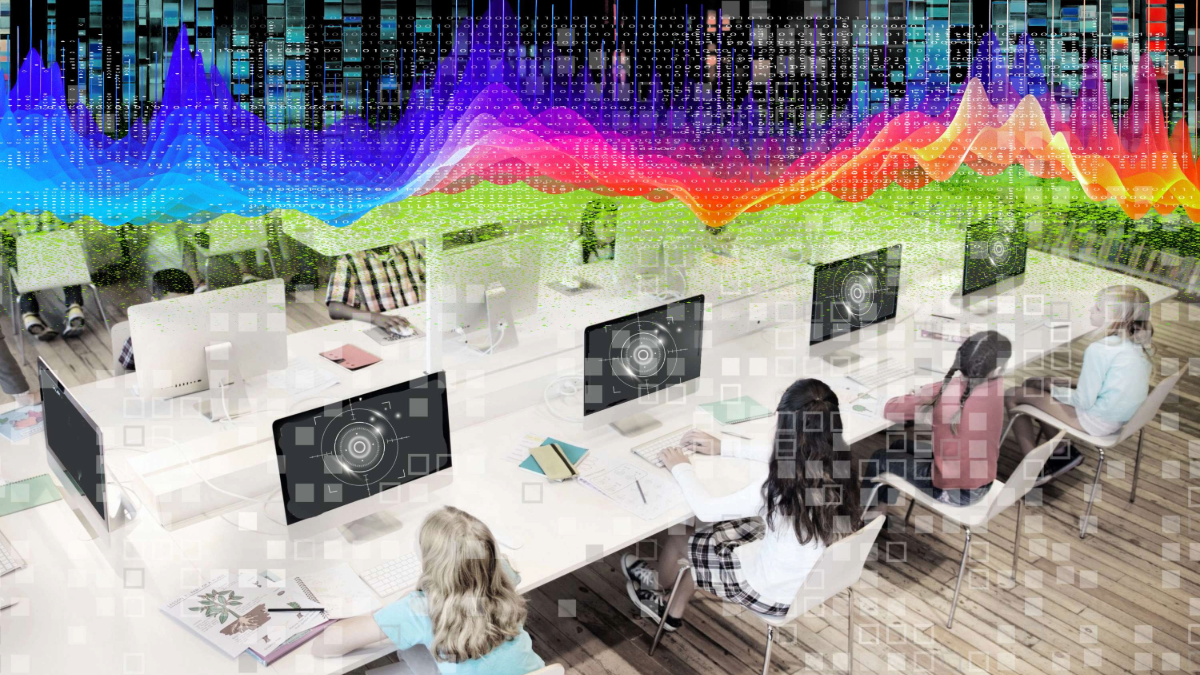
This image shows computer science students in Twiggs County, Georgia in their virtual class with Georgia Tech

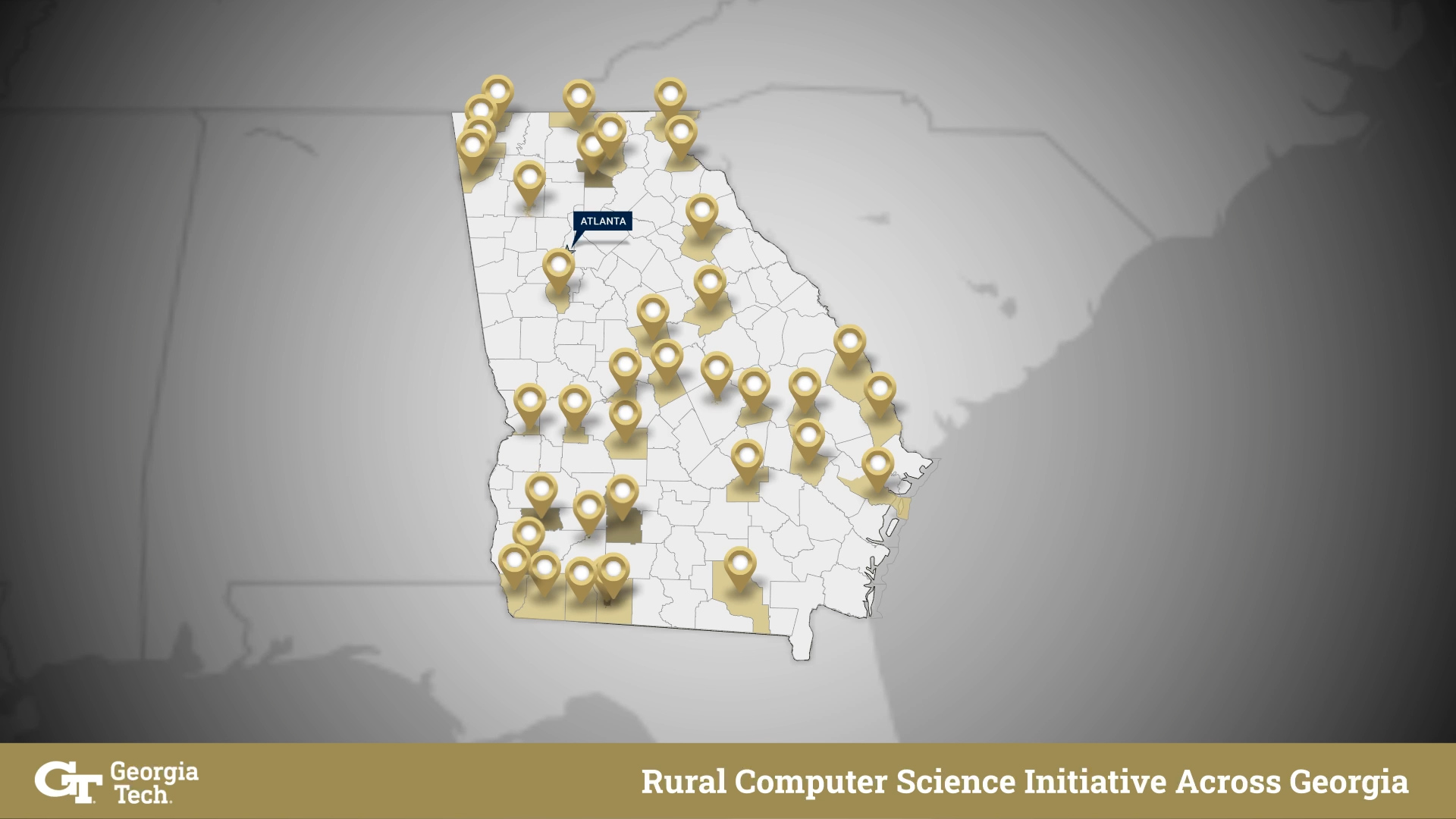
With 40 schools systems throughout Georgia participating so far, Georgia Tech’s Rural Computer Science Initiative bridges the educational divide for underserved communities across the state by connecting Georgia Tech faculty and students with rural school systems to co-teach dynamic computer science courses, empowering teachers with new skills and inspiring students to pursue tech careers while addressing workforce needs for Georgia's future economy.

In Georgia, where rural communities often face barriers to accessing advanced education in science and technology, Georgia Tech is leading a transformative effort to bridge the gap. The Rural Computer Science Initiative, designed by the Georgia Tech Research Institute (GTRI) and the Center for Education Integrating Science, Mathematics, and Computing (CEISMC), is redefining computer science education for underserved school districts.

The program, inspired by Georgia state representative Todd Jones, connects Georgia Tech faculty and students with rural schools to co-teach engaging computer science lessons while supporting local teachers in developing the skills needed to independently teach these subjects. As Rep. Jones explains, “At the end of the day, your birthplace should not determine the type of education you receive here in our state.” 

Empowering Teachers and Students 

Through a combination of remote teaching and in-class collaboration, the program is already active in 40 school districts, with plans to expand in 2025. The program's co-teaching model enables rural teachers to upskill while offering students dynamic, hands-on learning opportunities. Shiona Drummer, a participating computer science teacher in Twiggs County noted, “It's been really good to me because I did not have a background in computer science. Being a part of the program has influenced my teaching in that I know I have colleagues I can call on.” 

For students, the program unlocks new possibilities. 

"It's been fun. It's something new,” shared a Twiggs County student. “You get to just express yourself,” she continued. “Most classes, you just sit there, pretty much just bored. This class, you get to interact with things, and it’s just more fun.” 

These reactions reflect the initiative's broader goals: to inspire students, foster their confidence, and connect their education to real-world challenges. Lizanne DeStefano, CEISMC’s executive director, emphasizes this point: “The way that we've designed the Rural CS Initiative is that the student work is embedded in real-life problems, particularly those that affect our rural communities.” 

Preparing for the Future Workforce 

Beyond classroom learning, the program is helping shape Georgia’s future workforce to meet the demands of a rapidly evolving tech landscape. Rep. Jones highlights the initiative's broader implications: “We’ve given [students] that opportunity and that springboard to be able to do things they possibly may never have had the opportunity to do. It provides a greater educated workforce — one that brings us into 2030, 2040, and 2050 with the advent of AI, autonomous vehicles, and other technological advancements.” 

The initiative is also tackling one of the pain points for rural communities: the belief that young people must leave their hometowns to find well-paying, high-value jobs. DeStefano explains, “We’re using this as a way to show how students can remain in their communities, contribute to them with a computer science degree or knowledge, and still be an important cog in the global workforce.” 

How the Initiative Works

The professional development aspect of the Rural Computer Science Initiative helps ensure that the teachers can sustain the program’s impact long after Georgia Tech’s involvement. 

Leigh McCook, who leads the initiative at GTRI, outlined the process: “We first meet with the teachers, providing professional development to walk through the modules and show them how they should get involved in the classroom. Then we co-teach the first week and guide problem-based learning in the second week to assess student comprehension.” 

Ensuring that cutting-edge topics such as artificial intelligence, cybersecurity, and robotics are paired with a problem-based learning approach, is how Georgia Tech is properly equipping rural students with 21st-century skills. 

“Knowledge is power,” said Rise’ Jenkins, principal at Twiggs County High School. “Once you show students what’s available to them and the access they have, they just readily embrace the idea of learning.” 

An initiative that moves beyond education into more of a transformation, this program aims to prepare students for careers in emerging fields while ensuring Georgia remains competitive in the global economy. CEISMC’s DeStefano notes, “We’re not thinking about filling jobs today; we’re thinking about filling jobs for the next decade.”

View the video associated with this article >>

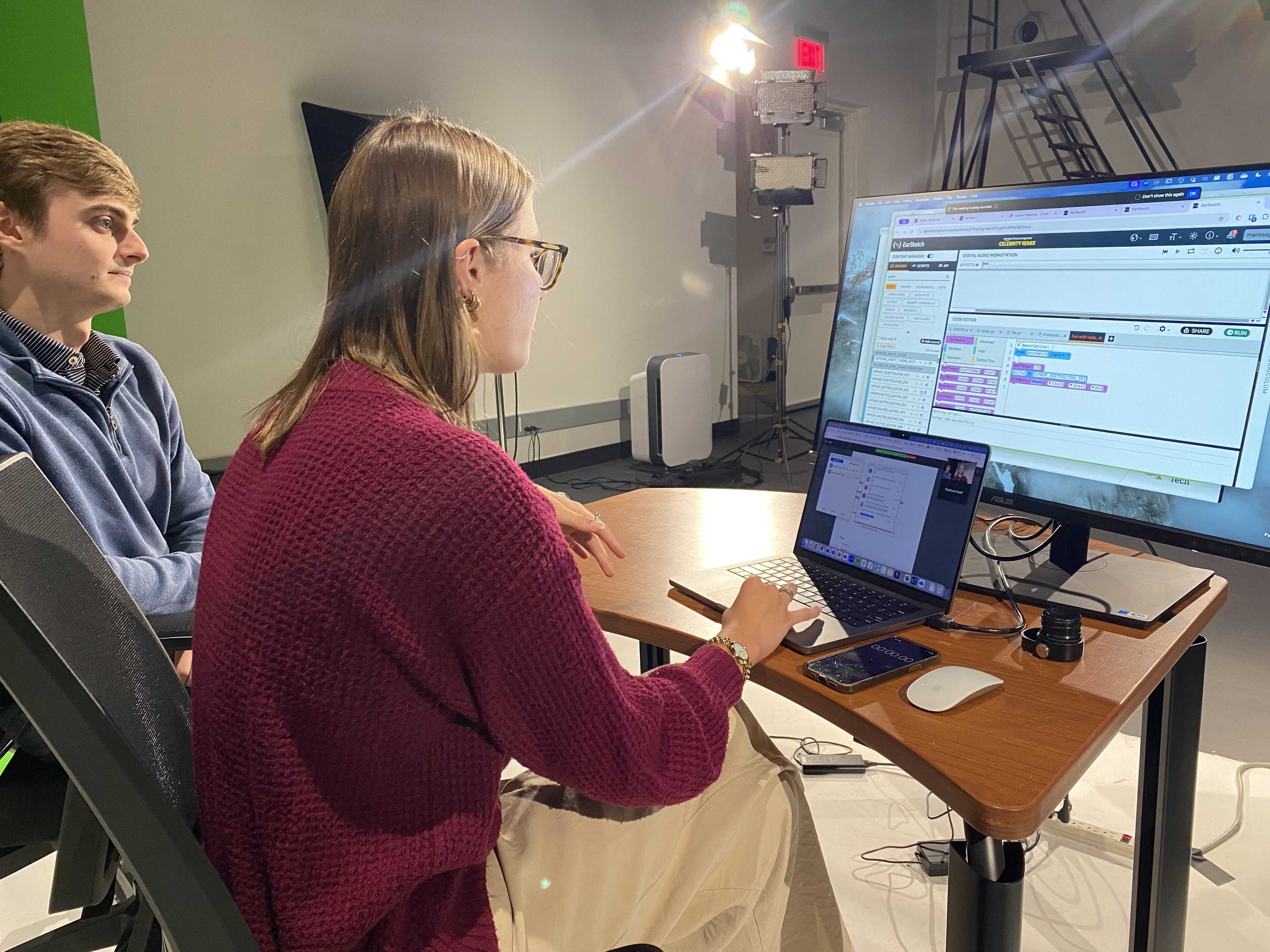
This image shows Georgia Tech instructors in Atlanta online with computer science students in Chattooga County

Twiggs County students are interacting with Georgia Tech instructors through the Rural Computer Science Initiative

These are the 40 school districts throughout Georgia that are currently participating in the Rural Computer Science Initiative

The Rural Computer Science Initiative allows for remote instruction and interaction with Georgia Tech faculty and students.


Interactivity@GT 2025

Interactivity@GT 2025

Georgia Tech’s Institute for People and Technology (IPaT) and Master’s Program in Human-Computer Interaction (MS-HCI) are pleased to announce Interactivity@GT, the annual research showcase and networking event for industry featuring our students and faculty engaged in people-centric innovation.