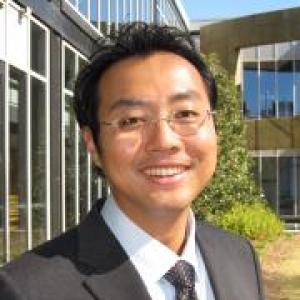

Dan Kotlyar

Dan Kotlyar

Dr. Dan Kotlyar is an Assistant Professor in the Nuclear and Radiological Engineering, G.W.W. School of Mechanical Engineering. He received his B.Sc. in Engineering in 2008, MSc in Nuclear Engineering in 2010, and PhD in Nuclear Engineering in 2013 from Ben-Gurion University, Israel. In 2014, he joined the University of Cambridge as a Research Associate in the Engineering Design Center. In 2014, he was elected as a Research Fellow at Jesus College. He is the recipient of the NRC Faculty Development Fellowship. Dr.

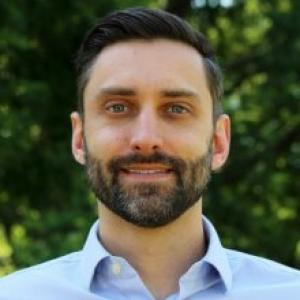
Andrew Medford

Andrew Medford

Dr. Medford is interested in leveraging materials informatics, statistics, and machine learning to maximize the practical impact of fundamental atomic-scale simulations in the field of surface science and catalysis. His research areas include heterogeneous catalysis, oxide surface chemistry, density functional theory, kinetic models, uncertainty quantification, and Bayesian optimization and inference.

William Koros

William Koros

Materials for membranes, sorbents, and barrier packaging applications rely upon the same fundamental principles. Thermodynamically controlled partitioning of a penetrant, such as carbon dioxide into a membrane, sorbent or barrier packaging layer is the first step in the transport process. If the material is a polymer, cooperative motions of the matrix enable diffusive motion by the penetrant. In highly rigid carbon molecular sieves and zeolites, motion of the matrix is negligible, and penetrant transport is governed by the relative size of pre-existing pores and the penetrant molecule.

Nian Liu

Nain Liu

Nian Liu began as an Assistant Professor at Georgia Institute of Technology, School of Chemical and Biomolecular Engineering in January 2017. He received his B.S. in 2009 from Fudan University (China), and Ph.D. in 2014 from Stanford University, where he worked with Prof. Yi Cui on the structure design for Si anodes for high-energy Li-ion batteries. In 2014-2016, he worked with Prof. Steven Chu at Stanford University as a postdoc, where he developed in situ optical microscopy to probe beam-sensitive battery reactions. Dr.

Carsten Sievers

Carsten Sievers

Sievers’ research interests are in heterogeneous catalysis, reactor design, applied spectroscopy, and characterization and synthesis of solid materials. Combining these interests he seeks to develop processes for the production of fuels and chemicals. His research program combines fundamental and applied research.

Matthew McDowell

Portrait of Matthew McDowell

Matthew McDowell joined Georgia Tech in the fall of 2015 as an assistant professor with a joint appointment in the George W. Woodruff School of Mechanical Engineering and the School of Materials Science and Engineering. Prior to this appointment, he was a postdoctoral scholar in the Division of Chemistry and Chemical Engineering at the California Institute of Technology. McDowell received his Ph.D. in 2013 from the Department of Materials Science and Engineering at Stanford University.

Ryan Lively

Ryan Lively

Ryan Lively was born in 1984. He spent approximately 16 years in Gainesville, FL and attended almost every home football game at The Swamp. He enrolled at Georgia Tech in 2002 as an eager Chemical Engineering student and has been a Yellow Jacket at heart ever since. During his studies at Georgia Tech, Ryan worked on research projects as diverse as ab initio quantum mechanical methods to estimate molecular binding energies, fresh Georgia peach preservation, composite spinneret design, dual-layer hollow fiber membrane spinning, and sorbent-loaded fiber spinning.

Meilin Liu

Meilin Liu

Liu's primary interests lie in fundamental understanding of the effect of structure, defects, and microstructure on transport and electrical properties of surfaces and interfaces.

Seung Woo Lee

Seung Woo Lee

Seung Woo Lee joined the Woodruff School of Mechanical Engineering at the Georgia Institute of Technology as an assistant professor in January of 2013. Lee received his Ph.D. in chemical engineering at MIT, focusing on designing high-energy and high-power density nanostructured electrodes for electrochemical energy storage devices, and synthesizing catalysts for electrochemical energy conversion of small molecules such as methanol oxidation and O2 reduction.